

At 7:18 p.m., the grill hisses, scissors snap through pork belly, and the table beside you is already wrapping lettuce like they were born doing it. You are still staring at the menu.
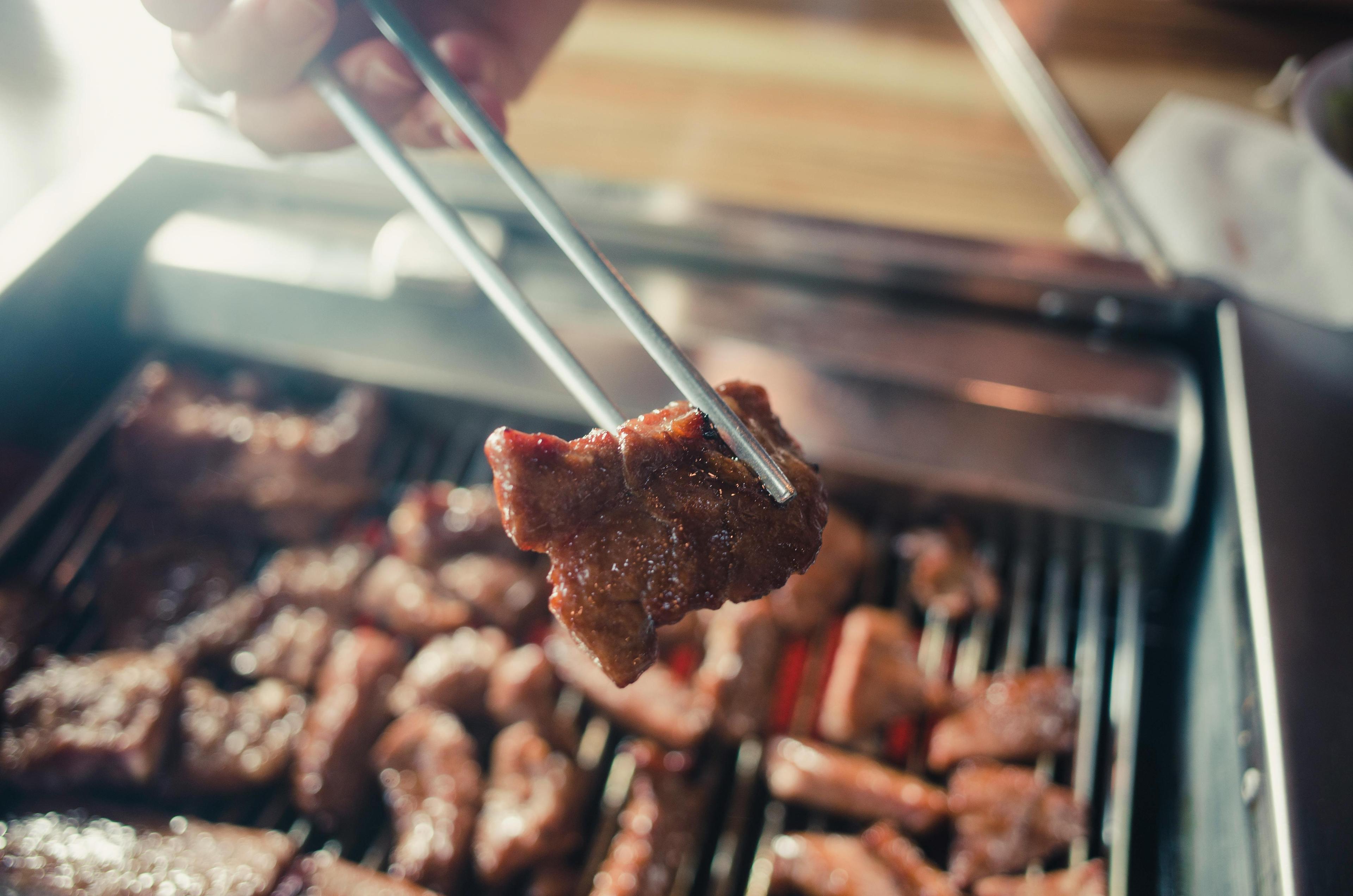
This korean bbq ordering guide fixes that awkward first ten minutes. Use it to order cleanly, avoid tourist-trap over-ordering, and eat without treating dinner like a live exam.

Before you start
Bring a payment card, a little patience, and at least one other hungry person. Many barbecue restaurants expect a two portions minimum for the grill, especially at dinner between 6 p.m. and 8 p.m.
Clear one common confusion now. Side dishes (banchan) are part of the meal, not a sampler platter you need to pay for one by one. Staff usually refill simple items if you ask politely or point at the empty dish.
Do not sit down starving and order everything at once. Korean barbecue works in rounds. First meat, then more meat if needed, then rice, stew, or noodles.

Choose a shop before the 7 p.m. rush
Pick your restaurant before 7 p.m. if you are in Myeongdong, Hongdae, Gangnam, or near Seoul Station. After that, groups fill the easy tables, and the staff has less time for menu rescue. Hungry crowds do not improve your decision-making.
Look for a place where the menu shows meat cuts, portion size, and prices clearly outside or near the entrance. A photo menu helps, but it is not everything. The real win is a simple menu with a few cuts and steady table turnover.
If a host waves you in too hard on a tourist street, keep walking. Good barbecue does not need a carnival barker.
Read the menu by cut, grams, and minimum order
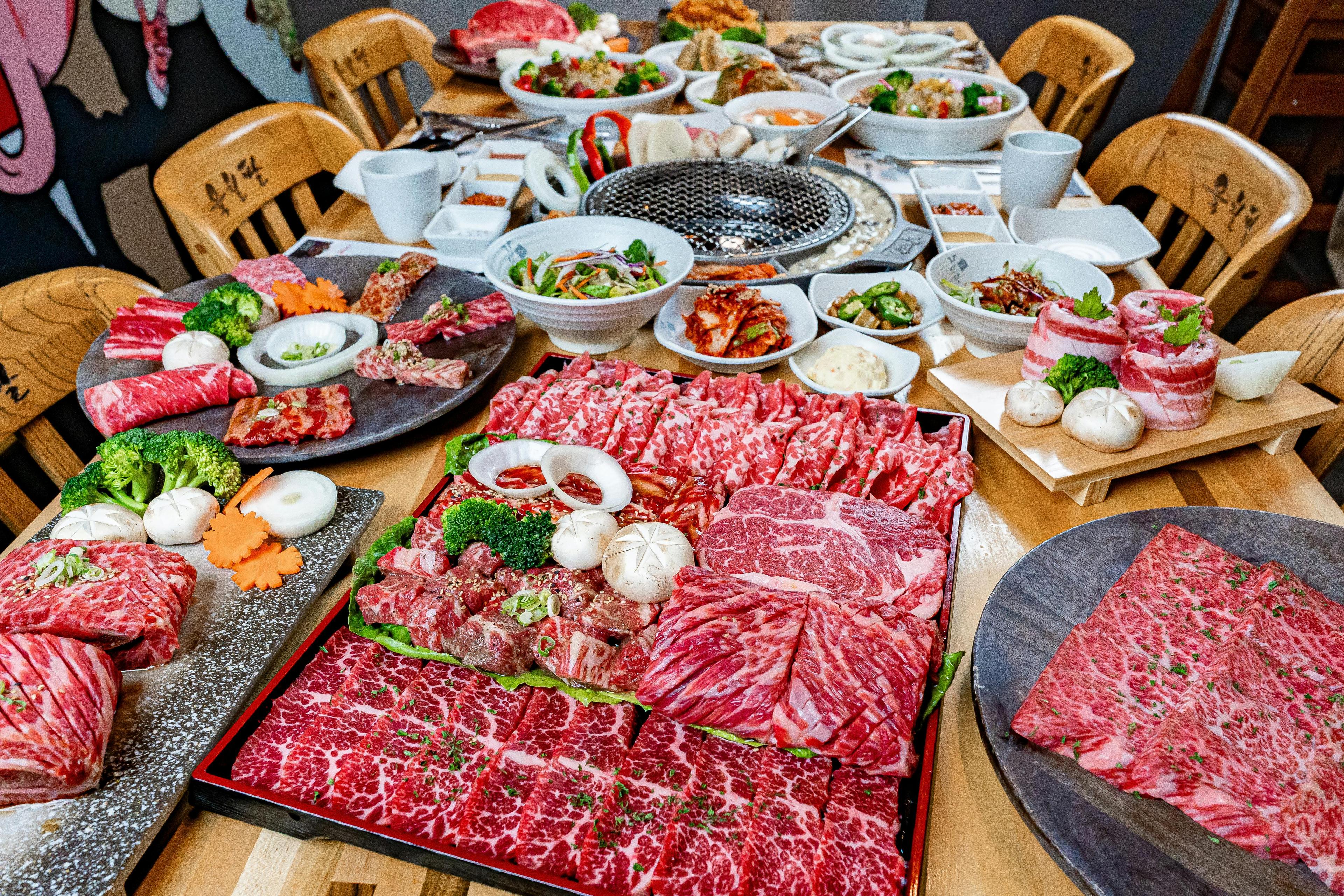
Read the menu from left to right like a tiny contract. You want the animal, the cut, the portion size, and the price. Menus often list meat by 100 g, 150 g, or 200 g, but the restaurant may still require two portions.
If the menu lists grams, count portions first and appetite second. That small print is where surprise bills are born.
Start with familiar cuts if this is your first Korean barbecue meal. Pork belly (samgyeopsal) is forgiving. Beef short rib (galbi) costs more and cooks faster. Marinated meat burns if you ignore it, because sugar does what sugar does.
Order the first round without overdoing it
Order one meat type for the first round unless your group is four or more. For two people, ask for two portions of pork or beef, plus rice only if you want it right away. Rice is not automatic at many barbecue restaurants.
Use short English, menu pointing, and fingers. Say the cut name if you know it, then show the number. You are not being rude. You are making the order hard to mishear.
- Two people: start with two portions of one cut.
- Three or four people: start with three or four portions across one or two cuts.
- Still hungry after round one: order more before the grill cools.
Grill the meat the way the staff expects
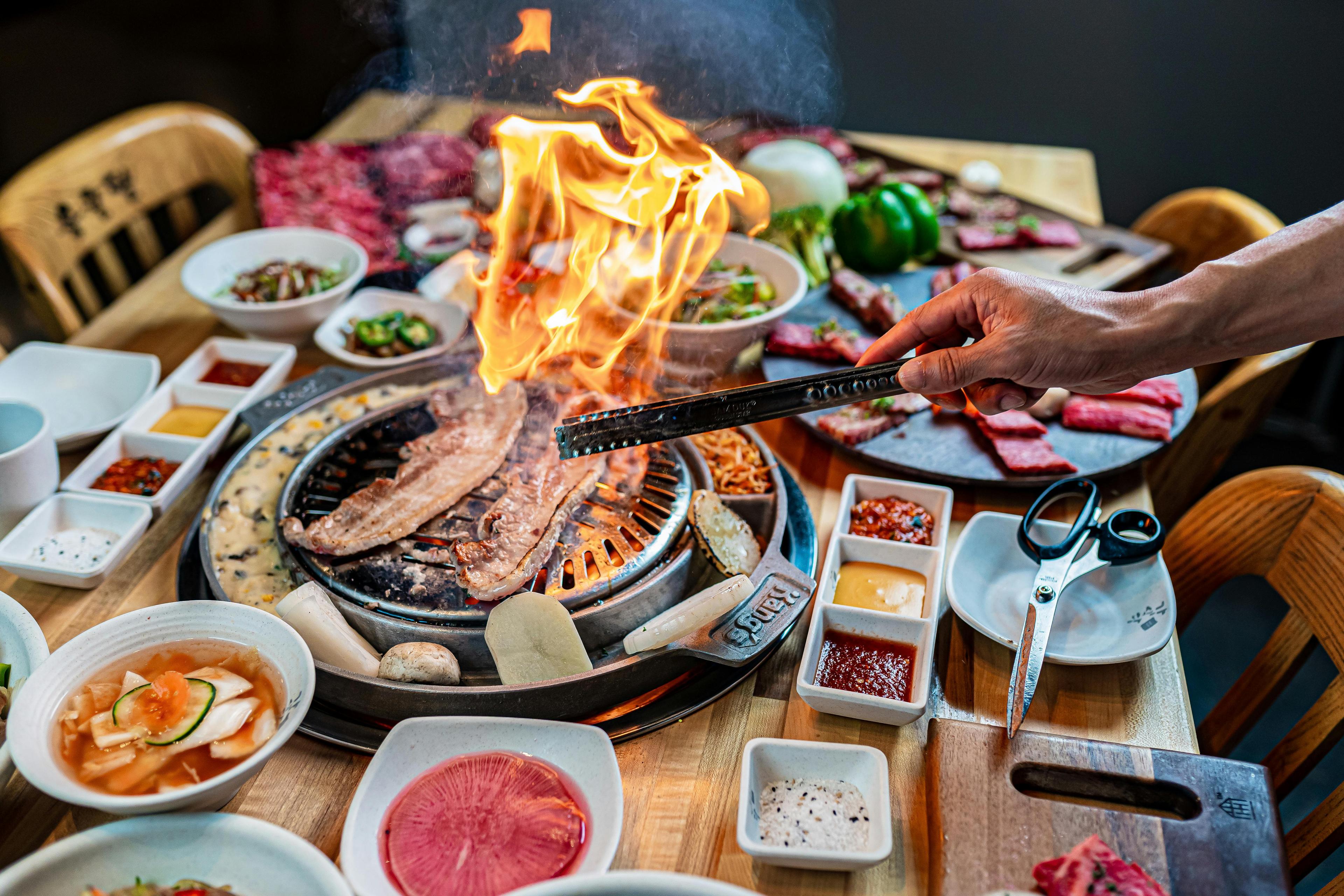
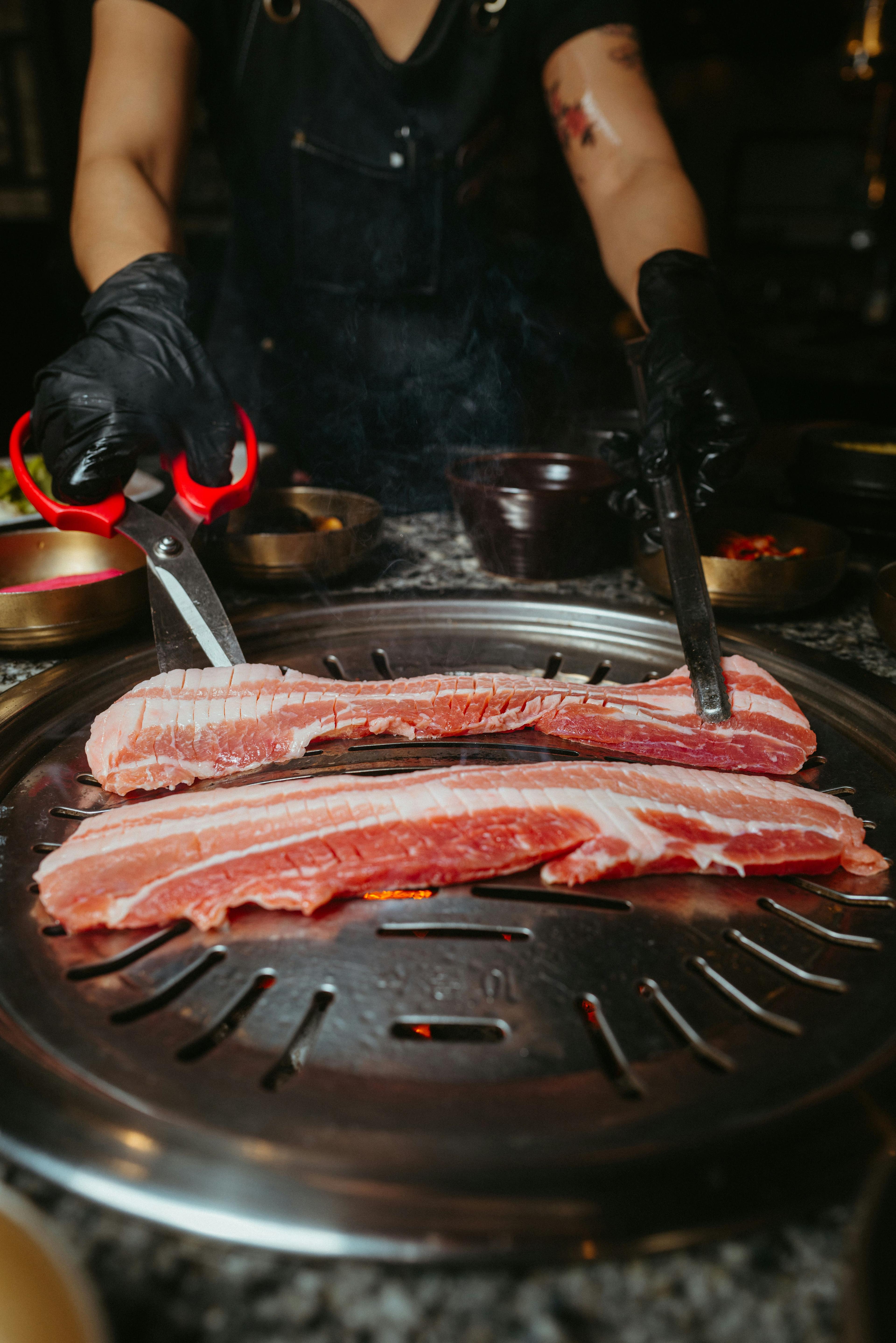
Watch the staff for the first minute. If they place the meat and take charge, let them. If they set down tongs and scissors, the grill is yours now. Congratulations, sort of.
Use tongs for raw meat and chopsticks for eating. Cut pork belly into bite-size pieces after the first side firms up. Then turn each piece when the edges brown. Do not flip every ten seconds. That is how you steam meat while looking busy.
Move cooked pieces to the cooler edge of the grill. Eat them soon. Korean barbecue is best when the table keeps moving, not when meat waits around like luggage.

Build your bite and pace the refills
Make one clean wrap at a time. Lettuce, meat, a dab of sauce, maybe garlic or green onion salad. Fold it small enough to eat in one bite. Nobody wants to watch your lettuce collapse in slow motion.
Ask for refills when a side dish is actually empty, not after two bites. Use the table call button if there is one. Otherwise, make eye contact, raise a hand slightly, and say excuse me (jeogiyo). Keep it calm.
Save stews and noodles for the back half of the meal. Soybean paste stew (doenjang jjigae) with rice is a strong finish after fatty pork. Cold noodles work better after beef or spicy marinades.
Pay without turning dinner into a debate
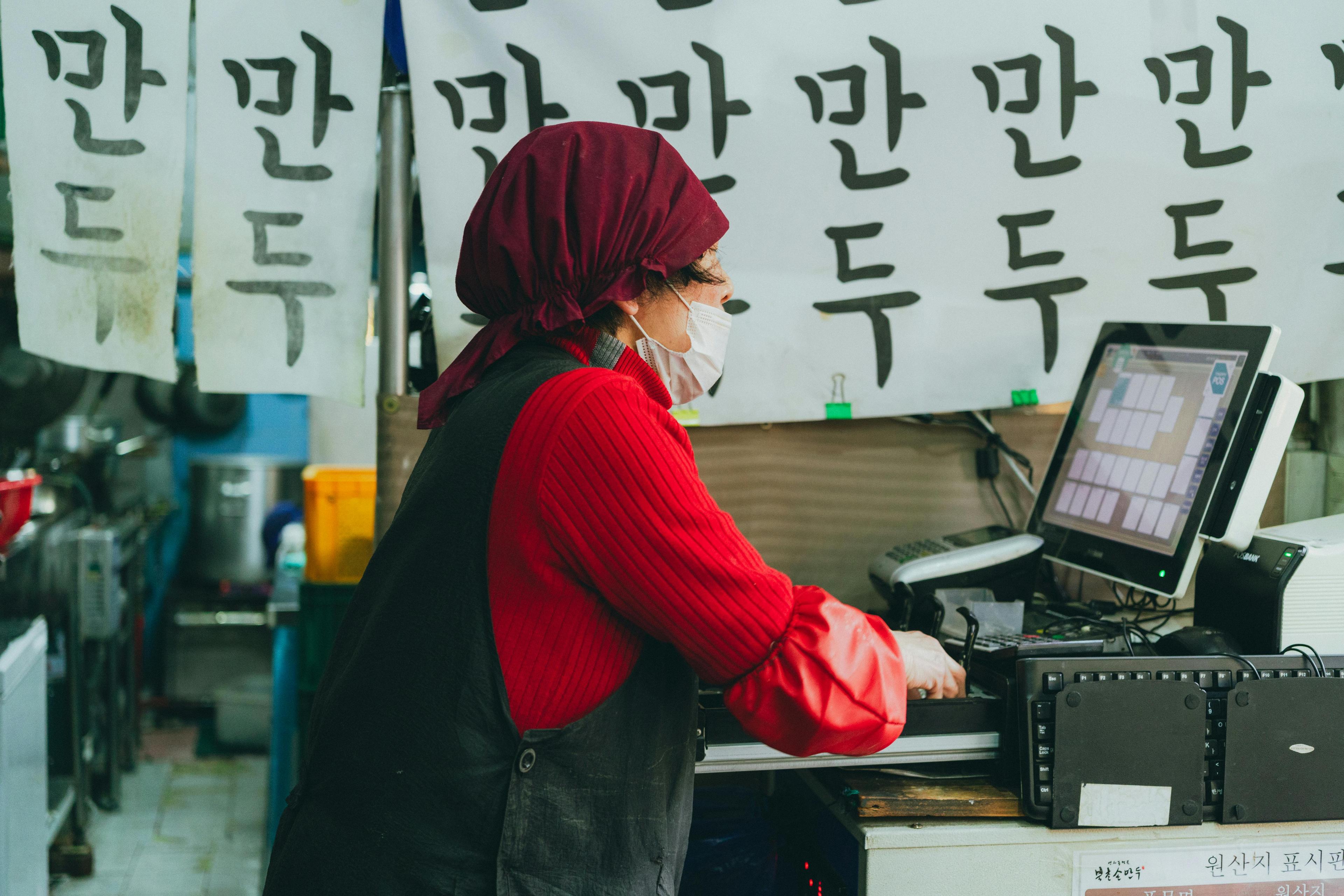
In most casual barbecue restaurants, you pay at the front counter after eating. Do not wait forever for a bill to appear on the table. Stand up, bring your card, and head to the register near the entrance.
Check the receipt for the number of meat portions, drinks, rice, and stews. In 2026, the safest move is still the boring one: confirm what you ordered before you tap. A five-second scan beats a ten-minute argument.
Splitting payment depends on the restaurant and the mood at the counter. One person paying is smoother. Settle up with your group afterward, away from the queue.
If something goes wrong
If the grill smokes hard, call staff right away. Restaurants swap grill plates often, especially during busy dinner service. You are not complaining. You are saving the meat and your jacket.
If you ordered too much, slow down and stop adding rice or noodles. Leftovers are not always packed at grill restaurants. Ask once, but do not build your plan around takeout.
If the bill looks wrong, point to the receipt and the menu photo. Keep your voice level. Most problems are portion confusion, not grand theft barbecue.
Your best Korean barbecue meal starts before the first piece hits the grill. Choose clearly, order in rounds, and let the table rhythm do half the work.
Save this for your Korea trip planning. Want weekly Korea insights from people who actually live here? Subscribe at hanway.example.com.
DISCOVER MORE STORIES

Korea Winter Travel: 5 Festivals for Ice Fishing, Sledding, and Snow Adventures
2026.10.16

Christmas in Korea: 5 Ways to Enjoy Seoul in December
2026.10.14

3 Korean Artisan Experiences: Meet the Makers Behind Traditional Crafts
2026.10.12

3 Beautiful Places to Visit in Korea in Autumn: Gyeongju, Naejangsan & Suncheon
2026.10.09

Seoraksan in Autumn: A Beautiful Mountain Escape on Your Korea Trip
2026.10.07

CONTACT
Let’s Plan Your
Unforgettable Korea Experience
Tell us what you’re looking for,
and our team will craft a private journey
that matches your taste, pace, and purpose.