

Jeju’s haenyeo are often introduced as one of Korea’s most fascinating cultural traditions. Yet they are not performers created for visitors. They are working women whose knowledge of the sea, breath-hold diving skills and community traditions have been passed down through generations.
For travelers who want to understand Jeju beyond its beaches and resorts, meeting the island’s haenyeo culture can become one of the most meaningful parts of a Korea journey. The key is to approach the experience with patience, flexibility and respect.
Who are the Jeju haenyeo?
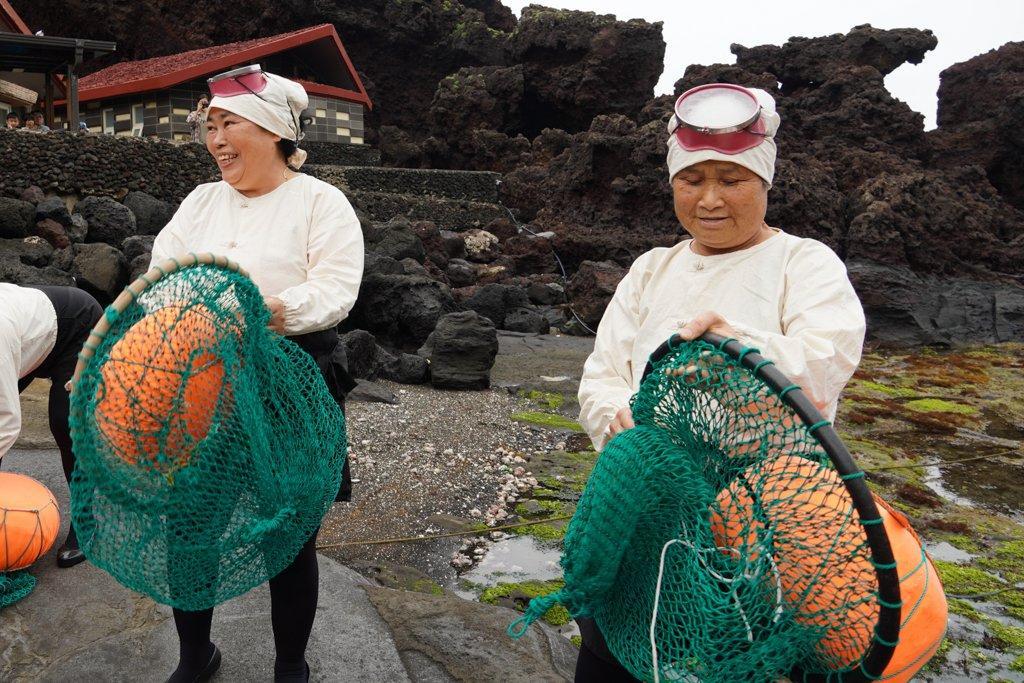
Haenyeo are female divers who enter the sea without oxygen tanks to gather seafood and seaweed. Their work depends on an intimate knowledge of the tides, currents, weather and local marine environment.
The Culture of Jeju Haenyeo was inscribed on UNESCO’s Representative List of the Intangible Cultural Heritage of Humanity in 2016. The recognition is not only about the act of diving. It also acknowledges the women’s communal working practices, ecological knowledge, songs, rituals and role within Jeju society.
To understand haenyeo culture, it is helpful to see it as a living system rather than a single activity to photograph.
Can travelers watch real haenyeo at work?
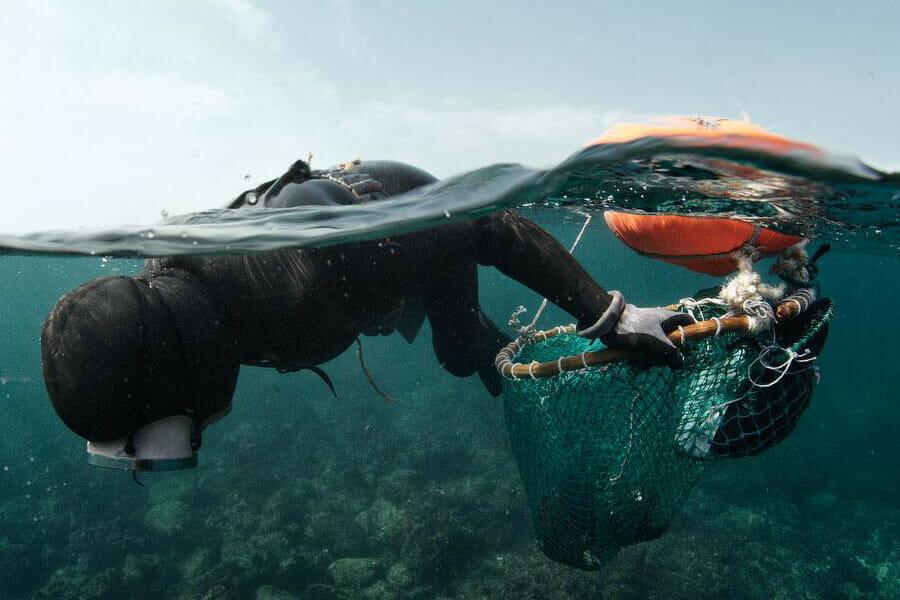
It may be possible, but it should never be treated like a performance with a guaranteed showtime.
Working haenyeo decide whether to enter the water according to sea conditions, tides, the season, harvesting rules and their own physical condition. Even when a visit has been arranged in advance, wind or waves may make diving unsafe.
A respectful itinerary therefore keeps the schedule flexible. Rather than promising that travelers will definitely watch the women dive, a local specialist can communicate with the village, check the conditions and plan the visit around the community’s actual working rhythm.
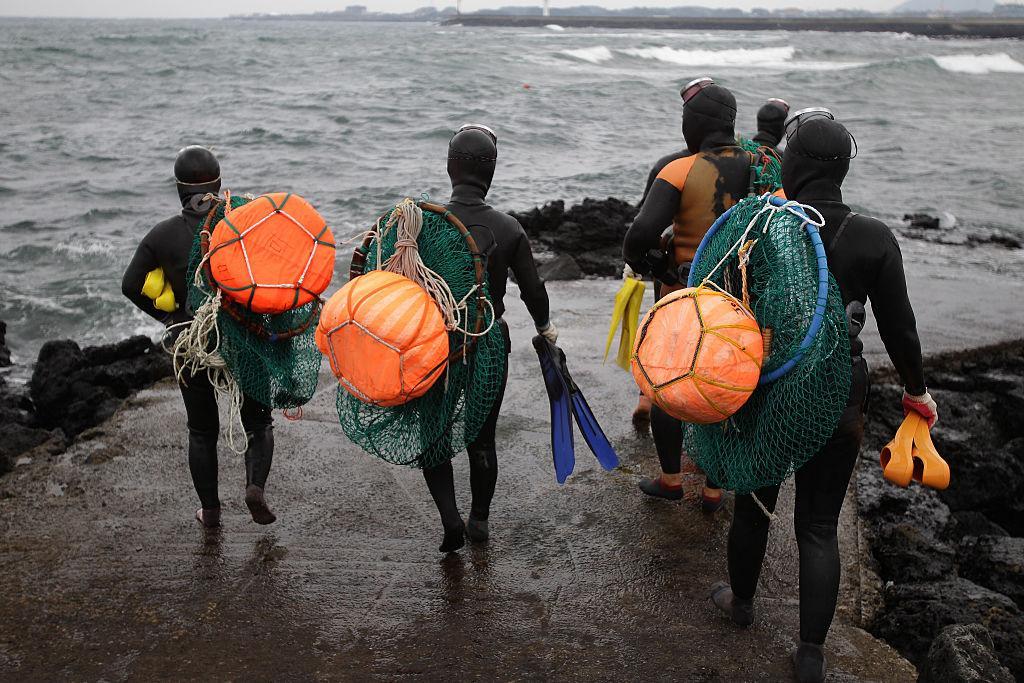
If the divers do enter the sea, visitors may be able to observe them preparing their equipment, entering the water and returning with their catch. The experience is often quiet and modest—which is precisely what makes it authentic.
What does a respectful haenyeo experience look like?
A good experience begins with permission and local coordination. It does not involve arriving unannounced, interrupting work or asking the women to repeat an action for a photograph.
Depending on the community and the day, a thoughtfully arranged visit might include:
- Meeting a local guide or community representative who can explain the village’s relationship with the sea
- Observing working haenyeo from an appropriate distance when conditions allow
- Learning about the bulteok, the traditional coastal gathering place where divers changed, warmed themselves and shared knowledge
- Hearing about harvesting seasons, conservation practices and the structure of the diving community
- Eating a simple seafood meal connected to the local catch
- Speaking with a haenyeo when she is available and willing, with interpretation provided
The purpose is not to create a private spectacle. It is to help travelers understand the lives and knowledge behind the tradition.
Which Jeju villages are best for learning about haenyeo culture?
There is no single village that is always the “best.” Communities along Jeju’s eastern and northeastern coast—including areas around Gujwa, Sehwa, Gimnyeong, Jongdal and Bukchon—retain strong connections to haenyeo culture.
The right choice depends on the season, the travelers’ route, sea conditions and which community is able to receive visitors respectfully at that time. For this reason, Hanway prefers to select the location through current local coordination rather than advertising one village as a permanent attraction.
What if the weather prevents the haenyeo from diving?
An authentic experience needs an equally thoughtful alternative. If the sea is too rough, the answer should not be to pressure the women to enter the water.
Instead, the day can focus on the broader culture surrounding their work. Alternatives may include a guided village walk, a conversation with a community member, a meal using locally harvested ingredients or a visit to the Jeju Haenyeo Museum for historical context.
A museum cannot replace meeting a living community, but it can add valuable background. The Jeju Haenyeo Museum explains the history, tools, food culture, beliefs and social contribution of the divers. A well-designed itinerary can use this context to deepen a community visit rather than present it as the experience itself.
How can travelers take photographs responsibly?
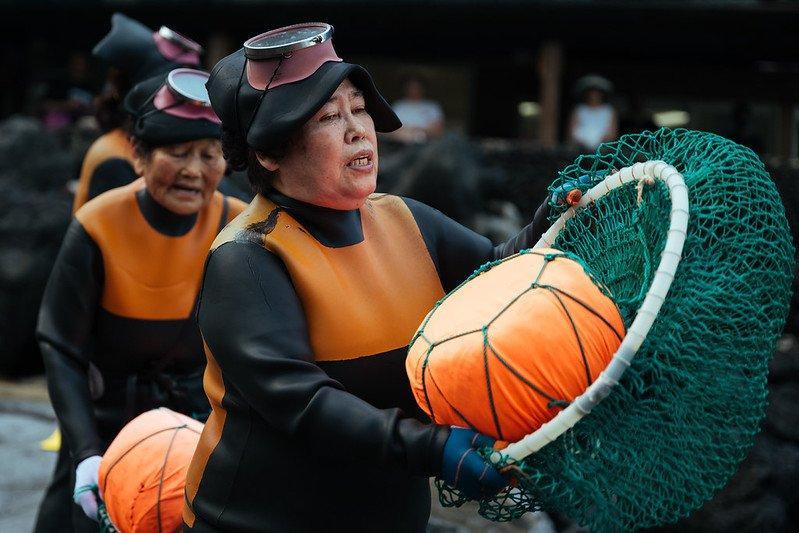
Always ask before taking close photographs or portraits. Avoid blocking access to the shore, touching equipment or photographing women while they are changing or resting without permission.
When the divers are working, their safety and concentration come first. A long lens and some distance are often more respectful than standing close to the water’s edge. If a conversation is possible, listen before reaching for the camera.
Why flexibility creates a better experience
Many luxury trips are designed around certainty: confirmed reservations, exact times and guaranteed access. A genuine haenyeo encounter works differently. Its value comes from respecting conditions that cannot—and should not—be controlled for tourism.
Hanway builds flexibility into the Jeju itinerary, communicates with local partners and prepares a meaningful alternative in case the sea conditions change. This allows travelers to encounter haenyeo culture with respect while still enjoying a seamless day.
The result may be less polished than a staged performance, but it is far more memorable: a real coastal community, a living tradition and a deeper understanding of Jeju.
DISCOVER MORE STORIES

The 7 Best Beach Resorts in Korea
2026.08.03

Best Area to Stay in Seoul: Myeongdong, Hongdae
2026.05.18

Korean Cha-Cha-Cha Culture: How Korea’s 1st, 2nd, and 3rd Rounds Work
2026.08.10

Best Korea Cities After Seoul: 2026 Guide
2026.06.05

Why Visit Mokpo? Korea’s Underrated Coastal City
2026.08.24

CONTACT
Experience the Real Jeju with Hanway
Hanway can design a private Jeju journey shaped around local communities, seasonal conditions and meaningful cultural encounters—not staged experiences. Tell us what you hope to understand, and we will create a thoughtful itinerary for you.
SPEAK TO AN EXPERT