

A night out in Korea rarely stays in one place.
Dinner may be only the beginning. After the meal, the group might move to a pub, continue to a noraebang, and finish with late-night food. Koreans call these stages il-cha, i-cha, and sam-cha—the first, second, and third rounds.
Some international visitors playfully call this Korea’s “Cha-Cha-Cha culture.” It is not the name of a dance. Here, cha means a round or stage of the evening.
Understanding this culture can help you enjoy Korean nightlife like a local.
What Is Korean Cha-Cha-Cha Culture?
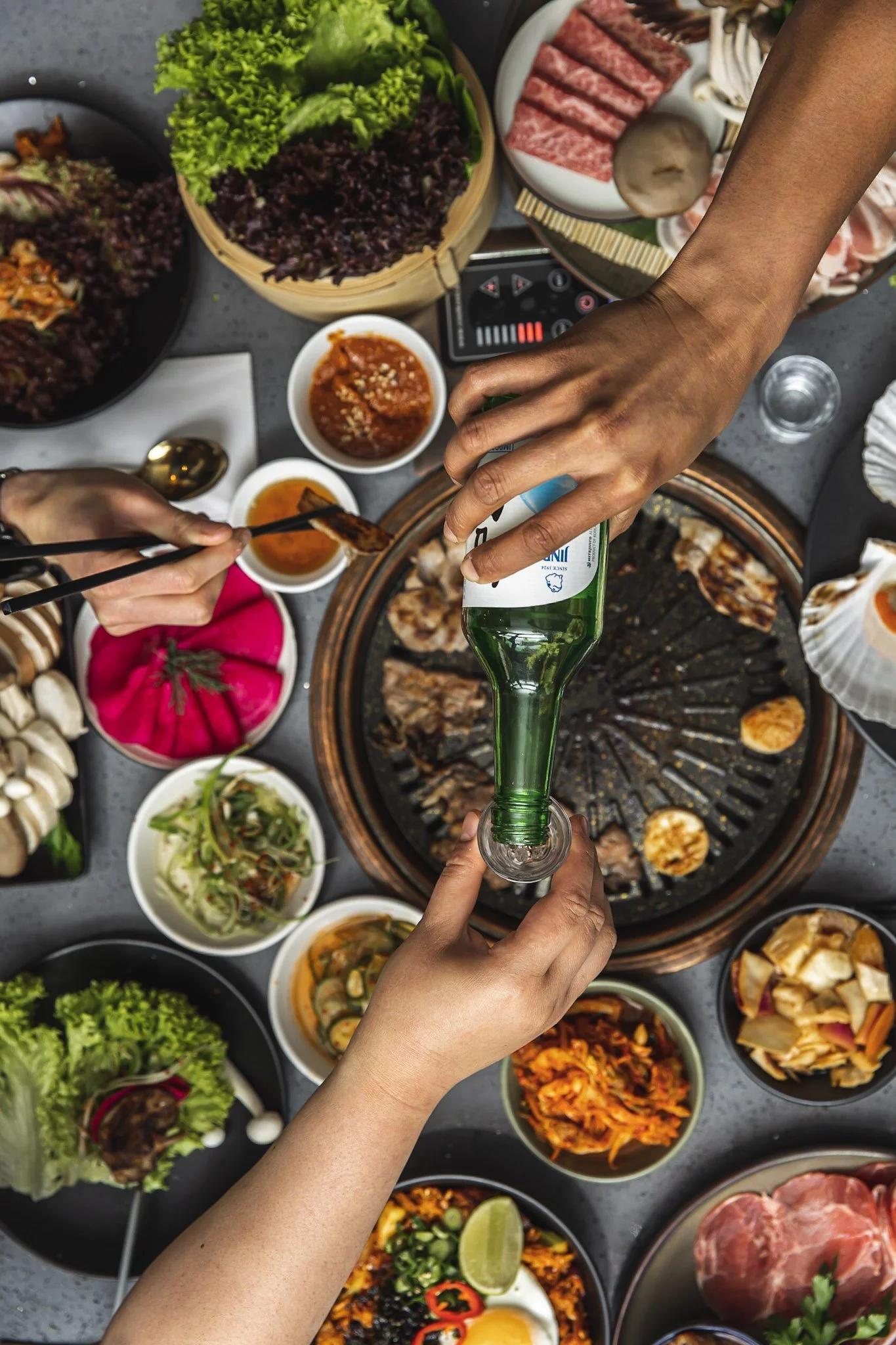
Korean Cha-Cha-Cha culture is the custom of moving to a new venue for each round of a social gathering.
Instead of spending the whole night in one restaurant, friends or coworkers often change locations as the evening progresses.
- 1차, il-cha: First round
- 2차, i-cha: Second round
- 3차, sam-cha: Third round
There can also be a fourth round, sa-cha, or even more. However, most visitors will experience the basic three-round version.
Each round usually has a different purpose, atmosphere, and menu.
1차: First Round—Dinner Comes First
The first round, or il-cha, usually begins at a restaurant.
Korean barbecue, fried chicken, sashimi, grilled seafood, spicy stews, or other dishes designed for sharing are common choices. Soju, beer, or makgeolli may be served with the meal, but alcohol is not essential.
Unlike in some countries, food plays a central role in Korean drinking culture. Koreans commonly order anju, meaning food eaten with alcohol, throughout the evening.
The first round is generally when everyone gathers, eats properly, and begins the conversation.
Typical first-round choices:
- Korean barbecue and soju
- Fried chicken and beer
- Pajeon and makgeolli
- Seafood and Korean spirits
- Hot pot or stew shared at the table
2차: Second Round—Drinks and Deeper Conversation
When dinner ends, someone may ask:
“I-cha gallaeyo?”
Shall we go for a second round?
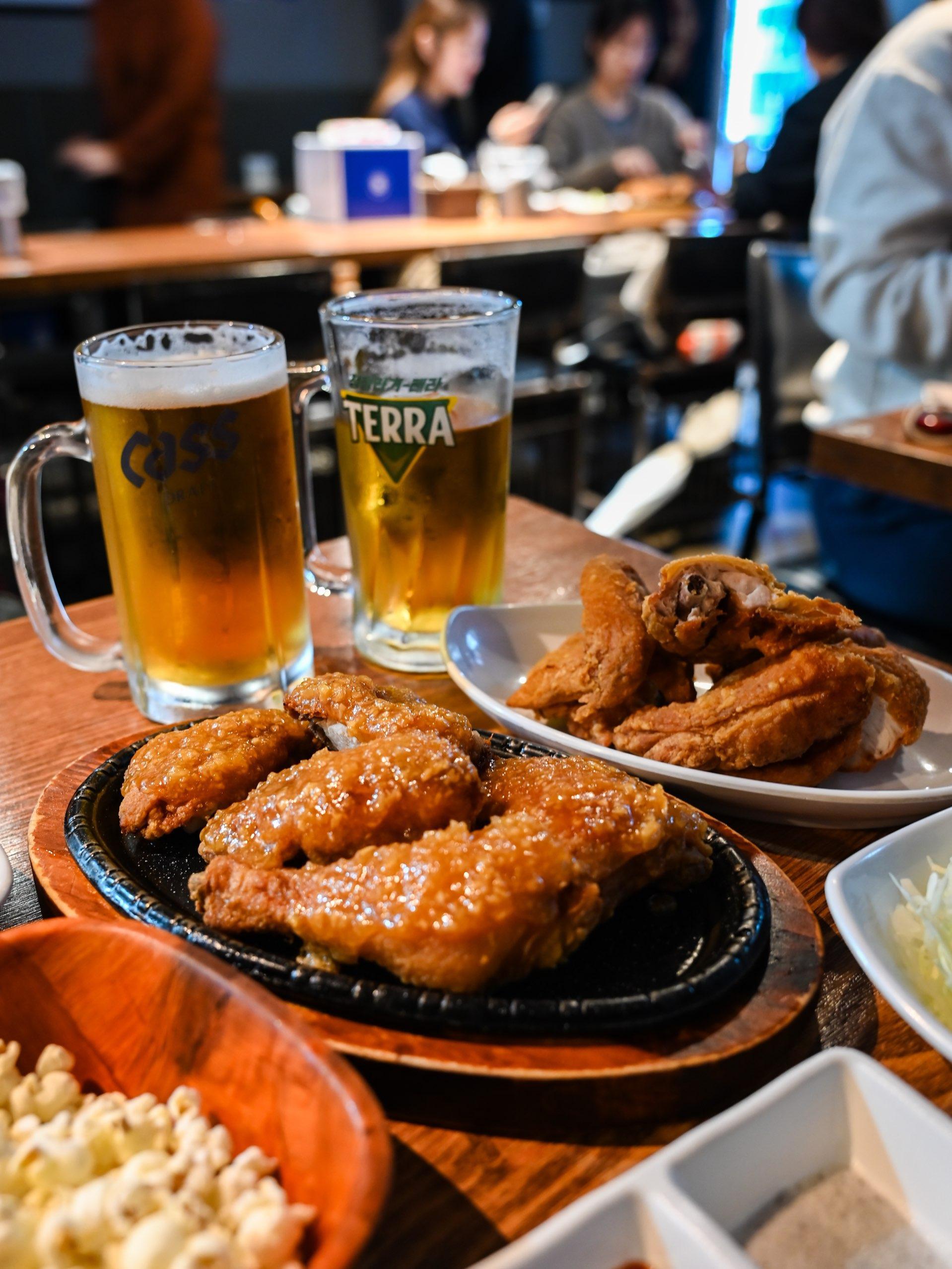
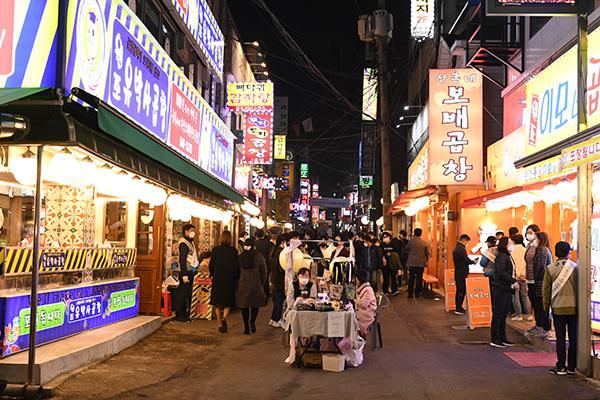
The group then moves to another venue, such as a Korean pub, beer hall, cocktail bar, wine bar, pojangmacha, or even a café.
The second round is usually more relaxed. People order lighter food, share drinks, and continue conversations that began over dinner. For friends and colleagues, this movement between venues creates more time to talk and become closer.
A café or dessert shop can also be the second round. Cha-cha-cha culture does not always mean drinking alcohol.
3차: Third Round—Noraebang or Late-Night Fun
The third round, known as sam-cha, is often the most energetic part of the night.
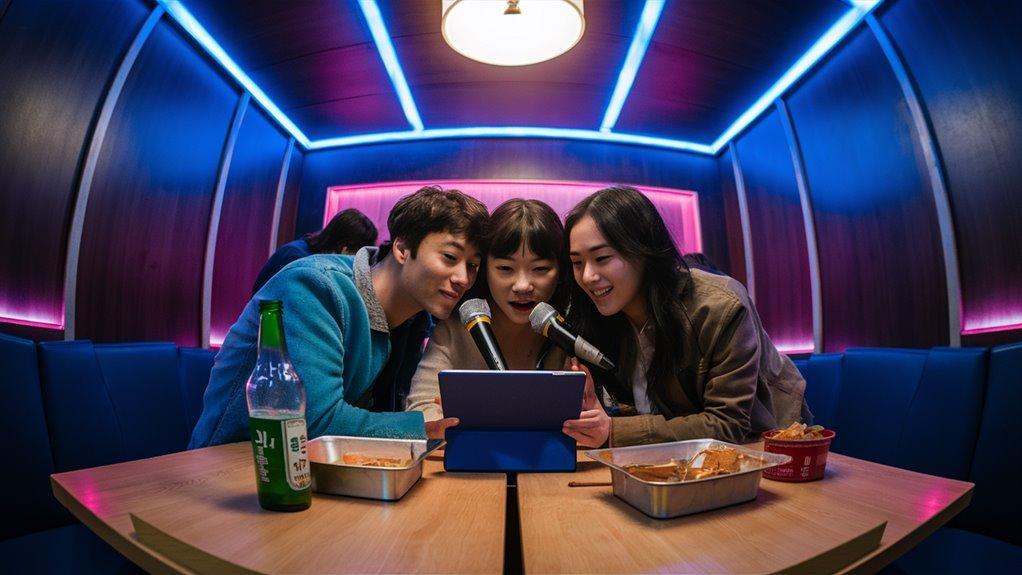
A common choice is noraebang, Korea’s private-room karaoke. The group rents a room, selects songs, orders snacks or drinks, and sings together.
Depending on the group and neighborhood, the third round could also take place at:
- A second bar
- A late-night pojangmacha
- A club
- A bowling alley
- A game room
- A dessert café
- A 24-hour restaurant
The exact route is flexible. What makes it sam-cha is simply that it is the third stop of the evening.
Is Cha-Cha-Cha Culture the Same as Hoesik?
Not exactly.
Hoesik refers to a group meal or gathering, traditionally involving coworkers. A hoesik may continue through several rounds, but the 1-cha, 2-cha, and 3-cha system is not limited to workplace dinners.
Friends, university students, families, business partners, and travelers can all enjoy a multi-round evening.
Modern Korean workplace culture is also changing. Second and third rounds are increasingly optional, and many gatherings now end after dinner. Joining every round should never be treated as compulsory.
Korean Night-Out Etiquette for Visitors
You do not need to memorize complicated rules, but a few customs will help you feel more comfortable.
Pour and receive politely
When drinking with someone older or more senior, pour and receive drinks using two hands. Among close friends, the atmosphere is usually more casual.
Do not feel pressured to drink
You can politely decline alcohol or choose a non-alcoholic beverage. Participating in the conversation matters more than finishing every glass.
Pace yourself
Do not drink too much during the first round. A Korean night out may continue across several venues, so eat properly, drink water, and go at your own pace.
Check how the bill will be handled
Depending on the group, one person may pay for a round, different people may take turns paying, or everyone may split the cost. Ask before assuming.
It is okay to leave
You can say:
“Jeoneun il-cha-kkajiman galgeyo.”
I’ll only stay for the first round.
Leaving after dinner is increasingly normal, especially during company gatherings.
A Sample Cha-Cha-Cha Night in Seoul
If you want to experience the culture for yourself, try this simple route:
First round: Korean barbecue
Begin with samgyeopsal or galbi, shared side dishes, and your choice of soju or a soft drink.
Second round: Korean pub
Move to a nearby pub for fried chicken, dried snacks, fruit, beer, or highballs.
Third round: Noraebang(노래방)
Finish the evening by singing Korean and international songs in a private karaoke room.
The best neighborhoods for a multi-round evening include Hongdae, Euljiro, Jongno, Gangnam, Itaewon, and Seongsu. Choose one neighborhood and stay within walking distance rather than traveling across the city between rounds.
Frequently Asked Questions
Q. What does “cha” mean in 1-cha, 2-cha, and 3-cha?
In this context, cha means a round or stage. Each number refers to the order of the venues visited during the gathering.
Q. Does every Korean night out have three rounds?
No. Some gatherings end after dinner, while others continue to four or five venues. It depends on the group, occasion, and individual preferences.
Q. Does Cha-Cha-Cha culture always involve alcohol?
No. A second or third round can involve coffee, dessert, karaoke, games, or late-night food without alcohol.
Q. What is the most common Korean nightlife route?
A typical route is dinner for the first round, a pub for the second round, and noraebang for the third round.
Q. Can foreign travelers join this culture?
Yes. It is one of the most enjoyable ways to experience Korean food, nightlife, and social culture. Just remember that you can skip drinks or leave whenever you feel ready.
Experience a Korean Night Out Your Way
Korean Cha-Cha-Cha culture is not simply about visiting several bars. It reflects the Korean habit of extending time together—sharing a meal, moving somewhere new, and allowing conversations to continue naturally. The best part is that there is no single correct route. Your rounds can include Korean barbecue, traditional markets, craft beer, desserts, karaoke, or hidden local restaurants.
With Hanway, your Korean nightlife experience can be designed around your tastes, travel style, and preferred pace.
Discover Korea beyond the usual tourist route with a personalized Hanway journey.
DISCOVER MORE STORIES

Korea Winter Travel: 5 Festivals for Ice Fishing, Sledding, and Snow Adventures
2026.10.16

Christmas in Korea: 5 Ways to Enjoy Seoul in December
2026.10.14

3 Korean Artisan Experiences: Meet the Makers Behind Traditional Crafts
2026.10.12

3 Beautiful Places to Visit in Korea in Autumn: Gyeongju, Naejangsan & Suncheon
2026.10.09

Seoraksan in Autumn: A Beautiful Mountain Escape on Your Korea Trip
2026.10.07

CONTACT
Experience Korea’s Nightlife Like a Local
From Korean barbecue to local pubs and noraebang, Hanway creates a personalized night out based on your tastes and travel style.
SPEAK TO AN EXPERT