

Why Visit Jeju? Nature, Local Culture, and Island Life Beyond the Tourist Spots
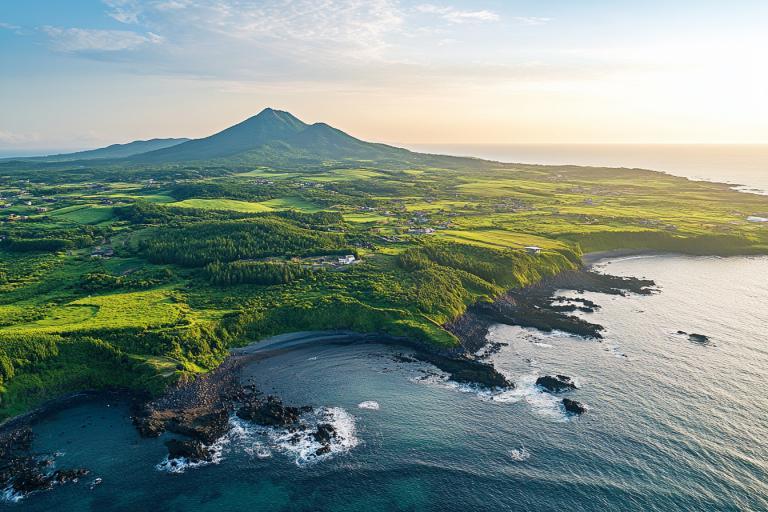
Jeju is often introduced through a familiar collection of images: waterfalls, beaches, volcanic landscapes, tangerine farms, and fields of yellow canola flowers.
All of these belong to the island, but they do not tell its full story.
Jeju is not simply a warmer holiday destination off Korea’s southern coast. It has its own geography, dialect, food, architecture, mythology, and way of life—elements that make the island feel distinctly different from mainland Korea.
To understand Jeju, travelers need to look beyond its most photographed attractions and spend time with the landscapes and communities that shaped the island.
Why does Jeju feel different from mainland Korea?
Jeju was formed by volcanic activity, and that geological history continues to define the island.
Hallasan Mountain rises from its center. Oreum, the island’s smaller volcanic cones, appear across the landscape. Black basalt stone is used for field walls, houses, statues, and village boundaries.
The island’s exposure to strong winds and the sea also influenced how communities developed. Traditional homes were built low to the ground, stone walls protected fields, and coastal villages relied on fishing and diving.
Jeju’s official tourism guide notes that the island differs from mainland Korea not only in nature, but also in its culture, dialect, folklore, and religious traditions. Its identity was created through centuries of adapting to a challenging natural environment. Visit Jeju’s cultural guide provides a useful introduction to this distinct heritage.
Walk through Jeju’s volcanic landscape
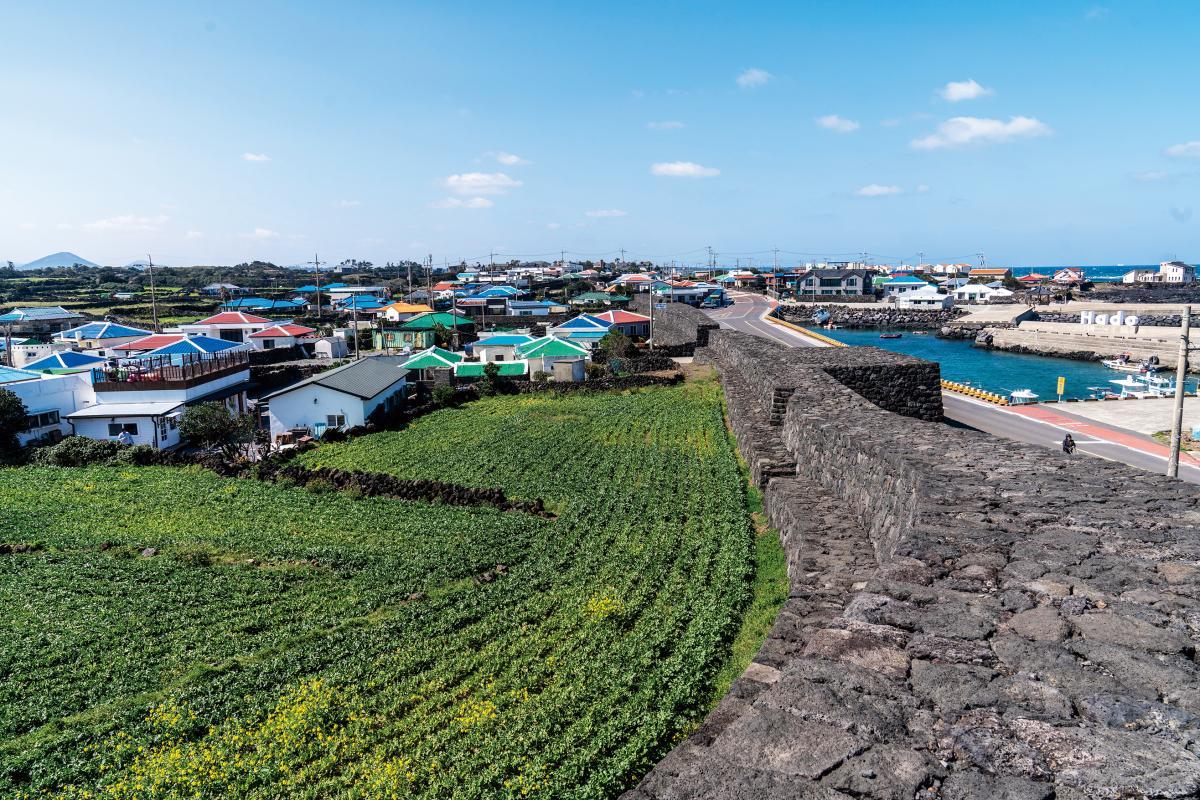
Many visitors drive from one famous viewpoint to another, but Jeju’s landscape is best understood on foot.
The Jeju Olle Trail follows coastal paths, village roads, forests, and farmland across the island. Travelers can select a shorter section rather than completing an entire route, allowing time to notice details that disappear from a car window.
The island’s oreum also provide a different experience from climbing Hallasan. These volcanic cones vary in shape and difficulty, and many offer open views over farmland, villages, and the sea.
A carefully chosen route can reveal Jeju’s natural character without requiring an exhausting hike. The important thing is selecting a trail that fits the season, weather, and traveler’s physical ability.
Understand Jeju through its stone culture
In Jeju, stone is more than part of the scenery.
Basalt walls divide fields without completely blocking the wind. Stone statues known as dol hareubang have become symbols of the island. Traditional homes, village paths, and spiritual sites also reflect the relationship between Jeju’s residents and their volcanic environment.
Jeju Stone Park offers context for these traditions through its outdoor landscape, exhibitions, and stories connected to Seolmundae Halmang, the mythical grandmother associated with the creation of Jeju.
Rather than treating the island’s stone walls as decorative backgrounds, visitors can learn why they exist and how they helped people live with Jeju’s wind and terrain.
This is where sightseeing becomes cultural understanding.
Learn about the women who shaped Jeju’s coastal communities
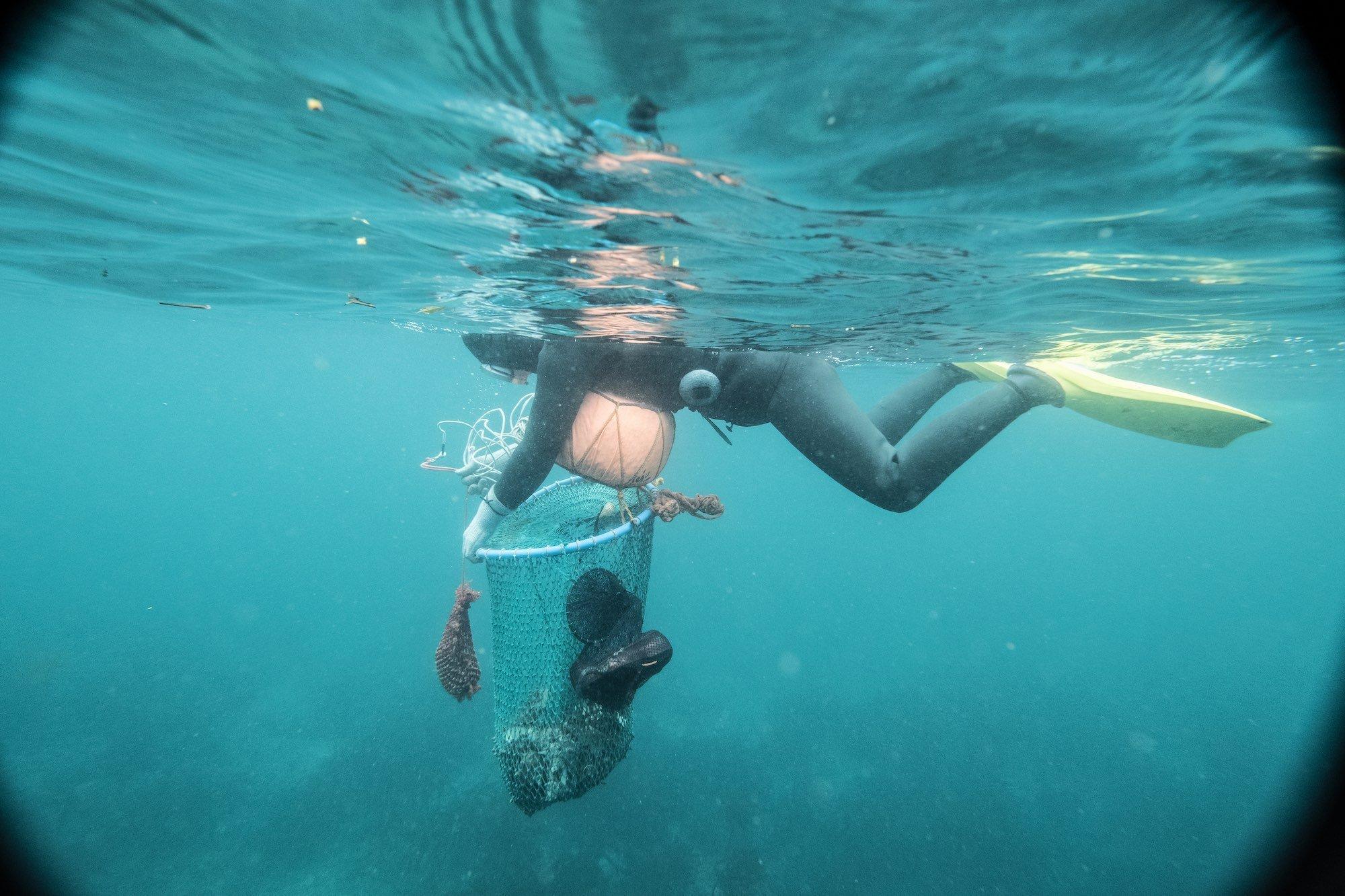
For generations, Jeju’s haenyeo have entered the sea without oxygen tanks to collect shellfish and other marine products.
Their diving culture represents skill, resilience, community knowledge, and an economic tradition in which women played a central role in supporting their families.
The haenyeo should not be viewed merely as a tourist attraction. Their numbers are declining, and their work remains physically demanding. A respectful experience begins by learning about their history and their relationship with the sea.
The Jeju Haenyeo Museum introduces the environmental, social, and economic history of haenyeo communities. Visitors can also explore coastal villages such as Sehwa, where local programs connect travelers with living haenyeo culture.
When visiting a village or dining at a haenyeo-run restaurant, it is worth remembering that this culture continues beyond the performance prepared for visitors.
Spend time in Jeju’s villages
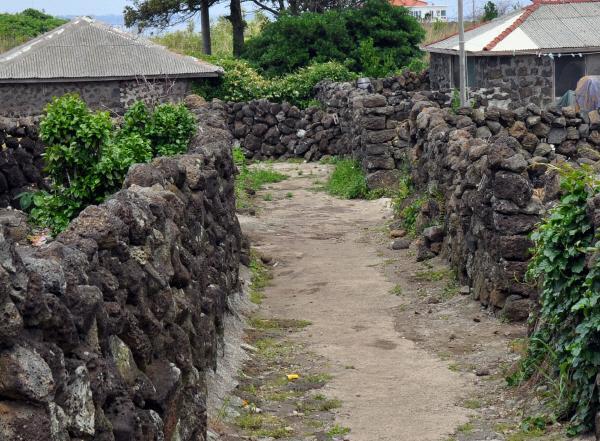
Some of Jeju’s most meaningful moments happen away from large attractions.
Villages such as Sehwa, Seongeup, Sagye, and Pyoseon offer different perspectives on island life. One may be known for its haenyeo culture and community market, another for traditional thatched-roof homes, and another for coastal landscapes shaped by fishing.
Seongeup Folk Village preserves traditional homes and architectural features adapted to Jeju’s weather. Sagye offers views toward Sanbangsan Mountain, Songaksan Mountain, and nearby islands along a coastline historically connected to fishing and diving. Visit Jeju’s Sagye guide provides more information about its landscape and marine traditions.
These villages are not interchangeable. Choosing the right one depends on whether you are most interested in food, history, walking, photography, or contemporary community life.
Taste food shaped by the island
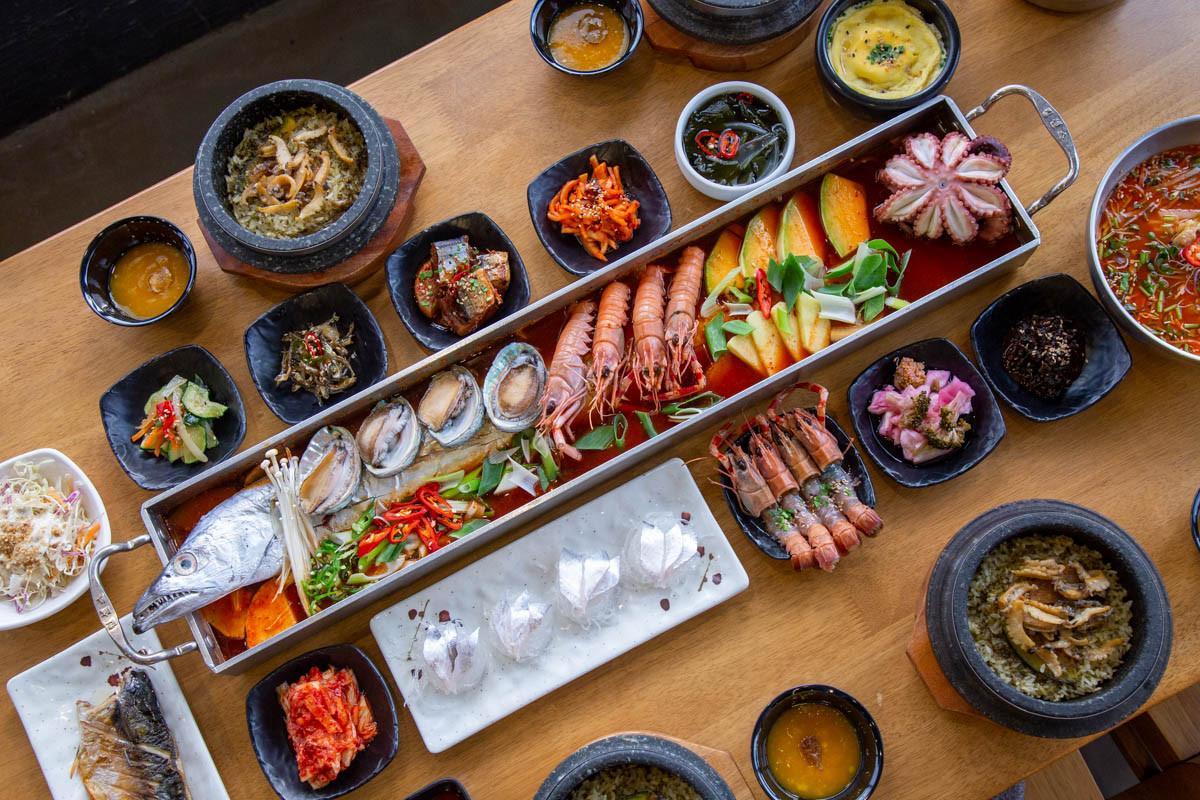
Jeju cuisine developed from the ingredients available on the island and the practical needs of its residents.
Black pork and fresh seafood may be the most recognizable dishes today, but Jeju’s food culture extends much further. Abalone porridge, grilled hairtail, seaweed soup, buckwheat dishes, gulfweed soup, local tofu, and seasonal seafood all reflect the island’s environment.
A meaningful culinary experience may take place in a small village restaurant rather than a famous venue promoted online.
It may also involve visiting a traditional market, meeting a local producer, or learning why certain ingredients are associated with particular seasons and communities.
Food becomes far more memorable when it is connected to the landscape and the people who produced it.
Allow Jeju to be slower
One of the most common mistakes visitors make is trying to circle the entire island in a day or two.
Jeju appears compact on a map, but travel between different coasts takes time. Weather can also change quickly, particularly around Hallasan Mountain. A schedule filled with distant attractions often results in more time inside a vehicle than outdoors.
A better approach is to focus on one part of the island each day.
Travelers might combine a coastal village with an Olle walk, visit Jeju Stone Park before exploring eastern Jeju, or dedicate a day to a haenyeo community and nearby seaside scenery.
Fewer stops create more space for the experiences that make Jeju special: walking beside stone walls, stopping at a quiet café, watching the sea change with the weather, or sharing a meal without rushing to the next destination.
Who is Jeju best suited for?
Jeju is especially rewarding for:
- Travelers who enjoy nature and gentle outdoor activities
- Couples looking for a slower, scenic journey
- Families who want a balance of culture and open spaces
- Repeat visitors seeking a different side of Korea
- Travelers interested in food, folklore, and local communities
- Photographers and artists drawn to volcanic and coastal landscapes
- Anyone who wants time away from Korea’s largest cities
However, experiencing Jeju well requires thoughtful planning. The right area, accommodation, transportation, and pace can completely change the journey.
Discover the island beneath the postcard
Jeju’s famous scenery is beautiful, but its deeper appeal lies in the relationship between nature and everyday life.
Volcanic stone became homes and field walls. The sea sustained communities of divers and fishers. Wind shaped architecture, farming, and local habits. Myths helped residents explain and live alongside the island’s powerful landscape.
When travelers understand these connections, Jeju becomes more than a collection of photo stops.
It becomes a place with its own voice, memory, and rhythm.
DISCOVER MORE STORIES

The 7 Best Beach Resorts in Korea
2026.08.03

Best Area to Stay in Seoul: Myeongdong, Hongdae
2026.05.18

Korean Cha-Cha-Cha Culture: How Korea’s 1st, 2nd, and 3rd Rounds Work
2026.08.10

Best Korea Cities After Seoul: 2026 Guide
2026.06.05

Why Visit Mokpo? Korea’s Underrated Coastal City
2026.08.24

CONTACT
Experience the Real Jeju, Your Way
Hanway designs private Jeju journeys around your interests, connecting nature, local communities, meaningful cultural experiences, and thoughtfully selected stays at a comfortable pace.
SPEAK TO AN EXPERT