

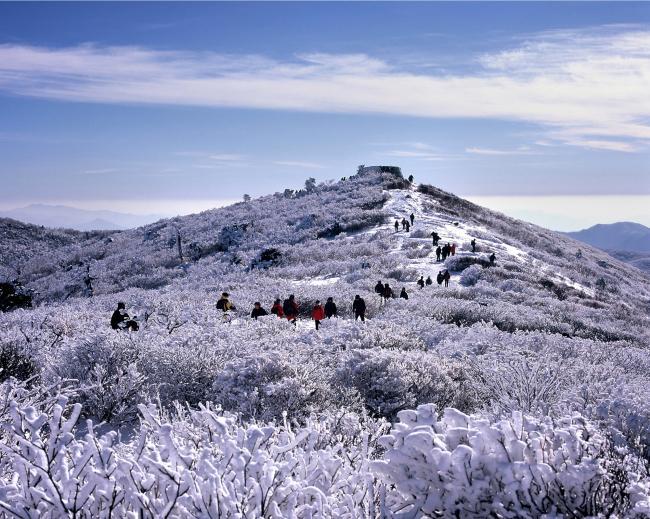
A fir branch bends beneath fresh snow. A temple roof appears between dark trees. Beyond it, mountain ridges fade into the winter sky.
There is a side of Korea that feels far removed from Seoul’s busy streets, and winter brings it into focus. In the mountains, a journey can unfold around a forest walk, a dramatic viewpoint and a warming meal at the end of the day.
For a first winter mountain trip in Korea, consider Deogyusan for gondola-assisted ridge views, Odaesan for forest walks and temple scenery, Taebaeksan for an active snow hike, Seoraksan for granite landscapes near Sokcho, and Hallasan for volcanic scenery on Jeju Island. The right choice depends on how much you want to walk and where the mountain fits into your wider itinerary.
Why visit Korea’s mountains in winter?
Winter reveals details that are easy to miss in other seasons: the outline of a rocky ridge, the shape of an old tree and the contrast between evergreen forest and fresh snow. At higher elevations, branches may be coated in rime ice, creating the delicate white formations often called “snow flowers.” These depend on weather conditions and are never guaranteed.
The appeal also extends beyond the landscape. Around some mountain areas, a walk can become part of a fuller day that includes a Buddhist temple, regional food or a stay in the countryside. You can experience winter through small moments as well as wide views: the crunch of snow beneath your boots, a quiet temple courtyard, a hot bowl of soup after time outdoors.
There are different ways to enjoy these places. Some visits focus on lower forest paths or lifts to viewpoints; others require a demanding hike. Choosing the right experience matters more than reaching the highest point.
Which Korean winter mountain suits your travel style?

1. Deogyusan: snowy ridges without a long ascent
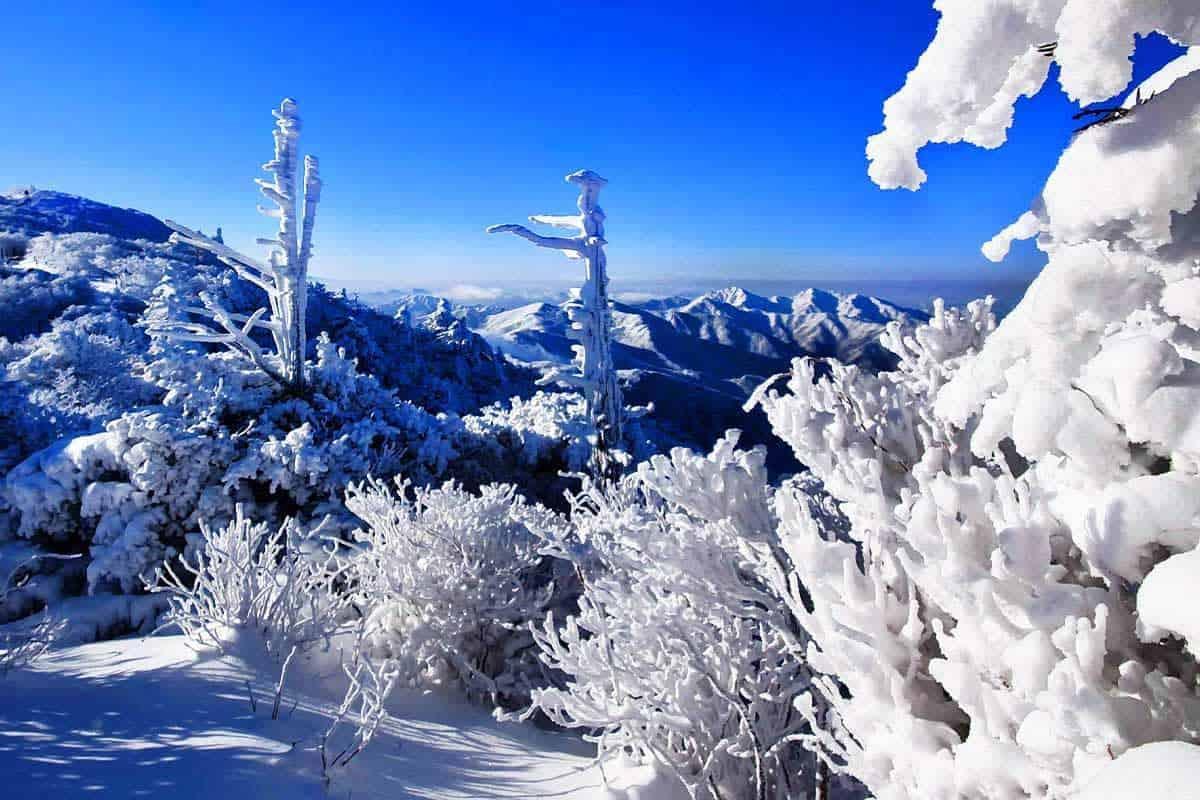
Deogyusan is a strong choice if you want high mountain views while reducing the amount of uphill hiking. Located in Muju, it is known for winter scenery around Hyangjeokbong, its 1,614-meter highest peak.
The sightseeing gondola from Muju Deogyusan Resort reaches Seolcheonbong. From there, a roughly 600-meter walking route continues toward Hyangjeokbong. Under favorable conditions, tourism guidance puts this walk at around 20–30 minutes each way, but snow, ice and crowds can make it considerably slower.
When conditions align, white-coated trees frame long views across the surrounding mountains. The journey offers a sense of elevation without spending the entire morning climbing from the valley.
The gondola does not remove winter exposure: the upper area can be very cold, windy and slippery. Decide whether to continue beyond the station according to the conditions and everyone’s ability.
Itinerary idea: Include Muju in a wider Jeonbuk journey, with Jeonju as a separate cultural stop. Check gondola operations and current booking requirements before fixing the day’s schedule.
2. Odaesan: a winter forest walk with a temple at its heart
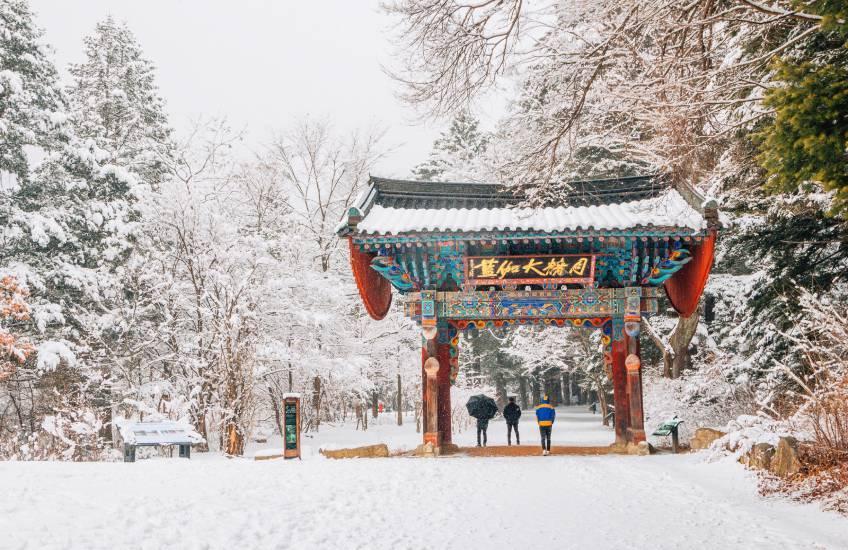
Odaesan suits travelers who prefer a quieter mountain experience centered on forest scenery and Korean Buddhist culture. In Pyeongchang, the fir forest path at Woljeongsa Temple offers a different rhythm from a summit hike.
The approximately one-kilometer trail runs between Iljumun Gate and Geumgang Bridge. Tall fir trees line the path, and after snowfall, green branches and white ground create a particularly striking contrast.
Allow time for the forest and temple together. A slower visit gives you room to notice the architecture, listen to the surrounding sounds and enjoy the mountain setting without organizing the whole day around a climb.
This lower forest route is generally a gentler option than high mountain trails, although compacted snow can still be slippery. It should not be confused with an ascent of Odaesan’s peaks.
Itinerary idea: Add Woljeongsa to a Pyeongchang stay or use it as an inland stop on a journey toward Gangneung and the east coast.
3. Taebaeksan: old yew trees and an active winter adventure

Taebaeksan is best considered by travelers who want a dedicated winter hiking day. Its snow-covered yew trees and high mountain scenery make it one of Korea’s distinctive winter landscapes.
The trees give the mountain much of its character. Twisted trunks and spreading branches stand out against the snow, while the Cheonjedan altar adds cultural significance to the upper mountain.
This is a place to appreciate the journey on foot: moving through forest, gaining elevation and emerging into a more open landscape. That experience requires enough fitness, daylight and preparation for the selected route.
Do not assume that a popular trail will feel easy in winter. Wind and icy surfaces can make progress slower and more demanding. Choose the route around the least experienced person in your party.
Itinerary idea: Stay in or near Taebaek to protect time for an early start and an unhurried return, rather than building the hike around a long transfer from Seoul.
4. Seoraksan: granite peaks and an east-coast escape
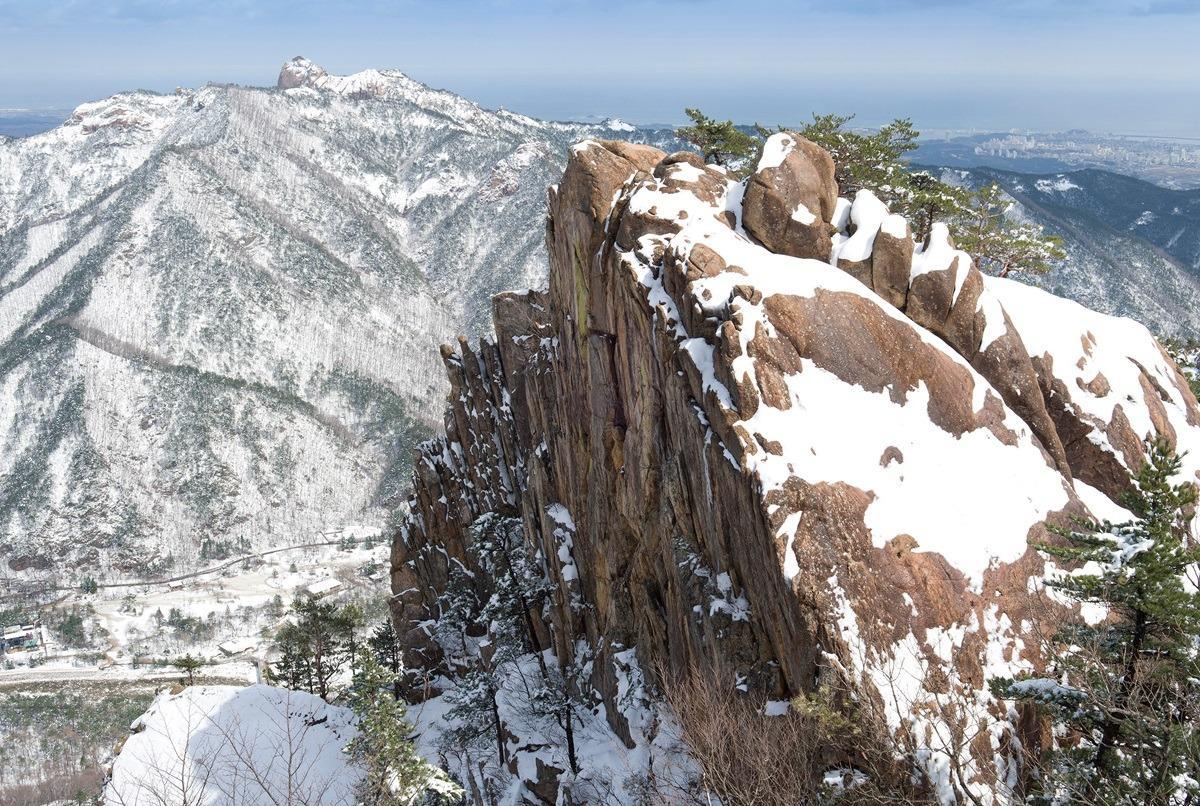
Seoraksan suits travelers who want dramatic mountain scenery alongside a stay near the sea. Near Sokcho, its granite formations give it a different appearance from the gentler forest landscapes of Odaesan.
A scenic visit can focus on the lower park area, with the cable car toward Gwongeumseong adding elevated views when it is operating. Snow cover varies, but the contrast between rock, forest and winter light can be rewarding even without a completely white landscape.
The cable car reaches the Gwongeumseong area, not Daecheongbong, Seoraksan’s highest peak. A winter summit hike is a separate undertaking requiring substantially more planning and experience.
Itinerary idea: Spend a night in Sokcho so you can combine a mountain visit with coastal scenery and local food. Keep the order of activities flexible if wind affects cable car service.
5. Hallasan: winter above Jeju’s volcanic island
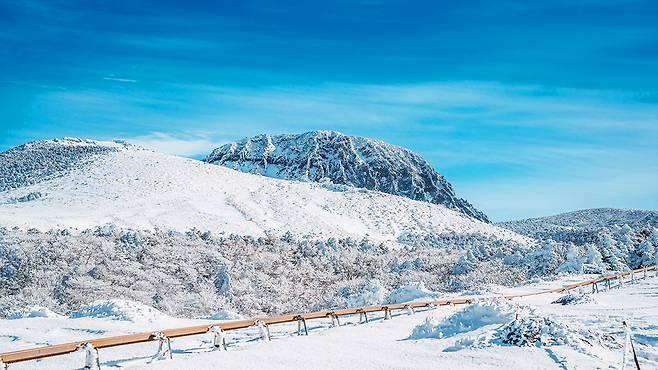
Hallasan is the choice for travelers who want to make a mountain experience part of a Jeju itinerary. Its volcanic terrain brings a different atmosphere to a Korean winter journey, with snowy highlands contrasting with the island’s coastal scenery.
Start by deciding whether you want a summit hike or a route that explores another part of the mountain. Under normal operations, Seongpanak and Gwaneumsa provide access to the Baengnokdam summit area and require reservations for their upper summit sections. Yeongsil and Eorimok offer different mountain experiences and do not reach Baengnokdam.
Routes without a reservation requirement still need careful planning. They remain subject to weather closures, entry cutoffs and winter conditions. A mild morning by the coast does not indicate what you will encounter higher up.
Itinerary idea: Give Jeju several days and retain flexibility around the mountain day. Choose your route according to current access, fitness and the forecast rather than treating the summit as an essential stop.
When is the best time to visit winter mountains in Korea?
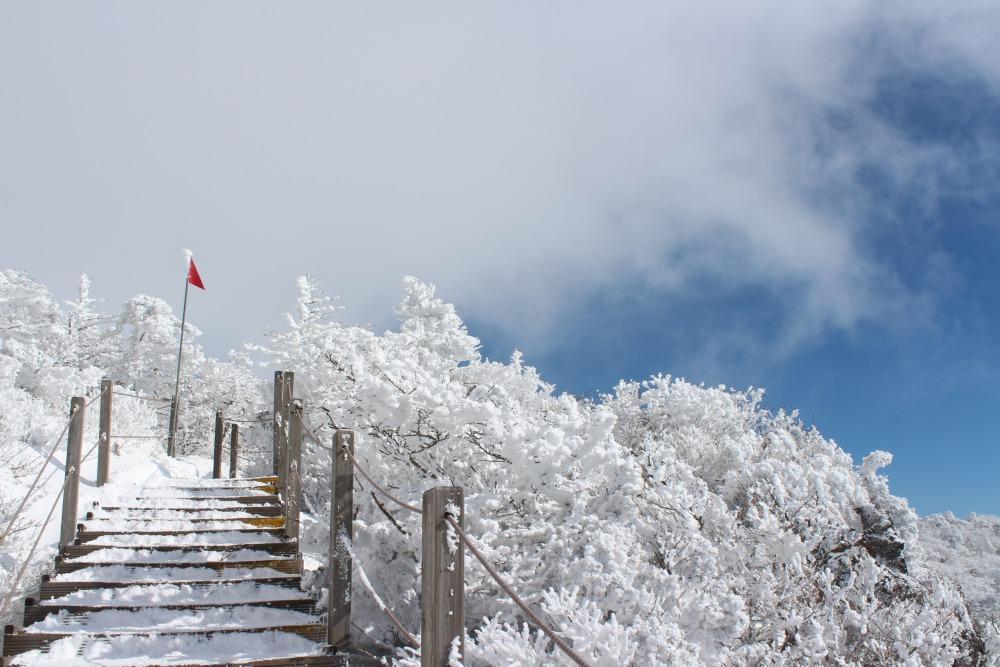
January and February are useful starting points when planning a trip focused on winter mountain scenery. Snow can also occur earlier or remain later at higher elevations, but timing varies by mountain and year.
No date guarantees fresh snow, rime-covered trees or clear views. Plan around the region’s seasonal conditions, then check the short-range forecast and park notices closer to your visit. Keep some flexibility if seeing snow is a major reason for the trip.
How should you prepare for a winter mountain visit?
Match your equipment to your route. For snowy or icy paths, suitable hiking footwear and correctly fitted traction devices are important. Dress in layers, including insulation and protection from wind, and bring gloves, a warm hat, water and food. Longer hikes also require navigation, a headlamp and a realistic turnaround plan.
Before setting out, check the official park’s trail status, entry cutoffs and weather restrictions. Confirm lift operations separately. Heavy snow can affect access roads as well as paths, and a guide cannot make a closed route available.
For families or groups with different abilities, a short forest visit or a viewpoint may create a better day than a summit attempt. Select the experience that everyone can enjoy comfortably.
Frequently asked questions about Korea’s winter mountains
Can I enjoy Korean winter mountains without a long hike?
Yes. Woljeongsa’s fir forest trail offers a lower-level mountain setting, while the Deogyusan gondola and Seoraksan cable car can reduce uphill walking when operating. Walking surfaces and weather still need to be assessed on the day.
Where should I go to see snow in Korea?
Deogyusan, Taebaeksan and Hallasan are established winter scenery destinations. Odaesan’s fir forest is especially atmospheric after snowfall. Snow at any particular location depends on recent weather, so check conditions before committing to a snow-focused visit.
Do I need a reservation to hike Hallasan in winter?
Under normal operations, reservations are required for the upper summit sections of Seongpanak and Gwaneumsa. Other routes have different access arrangements and do not reach Baengnokdam. Check the official Hallasan reservation system and current park notices for your travel date.
Can I visit a winter mountain on a day trip from Seoul?
Some destinations can be visited in a long day, depending on transport and conditions. For a dedicated hike or an unrushed visit, staying closer to the mountain often works better. Jeju’s Hallasan belongs within a separate island stay.
Find your own winter pace with Hanway
Which winter scene would you choose: a fir forest beside a temple, a gondola ride into snowy ridges, or a rewarding day on a mountain trail?
Share your travel dates, walking preferences and the places you hope to explore. Hanway can help shape a private Korea itinerary that brings together mountain scenery, regional culture and time to enjoy the journey, with plans suited to seasonal conditions.
DISCOVER MORE STORIES

How Many Days Do You Need in Korea? 7, 10 or 14 Days
2026.10.23

Korean Hiking Culture: From Summit Photos to Makgeolli and Pajeon
2026.10.21

Korea Winter Travel: 5 Festivals for Ice Fishing, Sledding, and Snow Adventures
2026.10.16

Christmas in Korea: 5 Ways to Enjoy Seoul in December
2026.10.14

3 Korean Artisan Experiences: Meet the Makers Behind Traditional Crafts
2026.10.12

CONTACT
Plan My Korea Winter Journey
See the Korea everyone knows. Discover the Korea locals love.
SPEAK TO AN EXPERT