

The first conversation of the day might happen on a forest staircase. A passing hiker offers a brief greeting, someone pauses to take a photograph, and your walking companion begins discussing lunch well before the descent.
In Korea, a mountain outing often extends beyond the trail. The walk, the company and the meal afterward can all become part of the same experience.
Korean hiking culture combines outdoor exercise with everyday social rituals: greeting fellow walkers, taking a summit photograph, enjoying a packed snack and gathering for food after the descent. These are customs you may encounter, rather than a checklist every Korean hiker follows.
For travelers, noticing these details can make a mountain day a way to understand local life as well as enjoy the view.
1. Hiking Is Often a Social Occasion
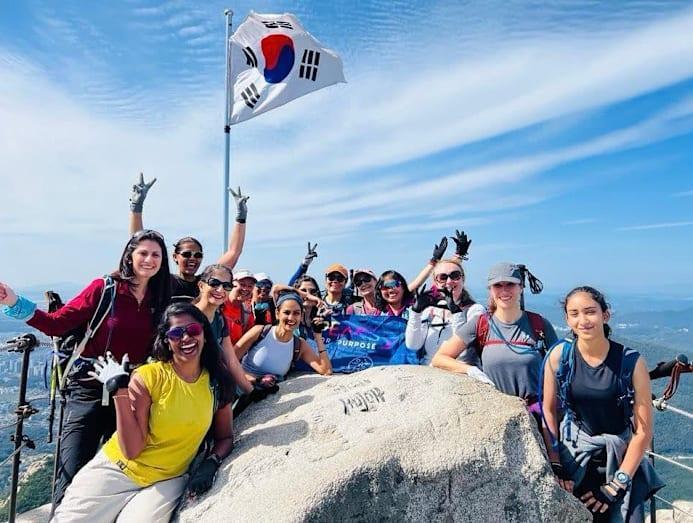
For many people, hiking creates time to spend together without needing an elaborate occasion. Friends arrange a morning walk, families choose a forest path, and regular hiking groups build their weekends around a longer route.
You may see experienced older walkers with well-used trekking poles alongside younger hikers taking photographs. Some arrive with carefully packed lunches; others have already chosen the restaurant where the group will meet afterward.
Around Seoul, a mountain outing can also fit into an urban itinerary. A morning among wooded slopes and an afternoon in a neighborhood restaurant can belong to the same day.
There is no single way to look or behave like a Korean hiker. What these outings often share is a sense that time on the mountain is worth making room for.
2. A Small Greeting Is Part of the Experience
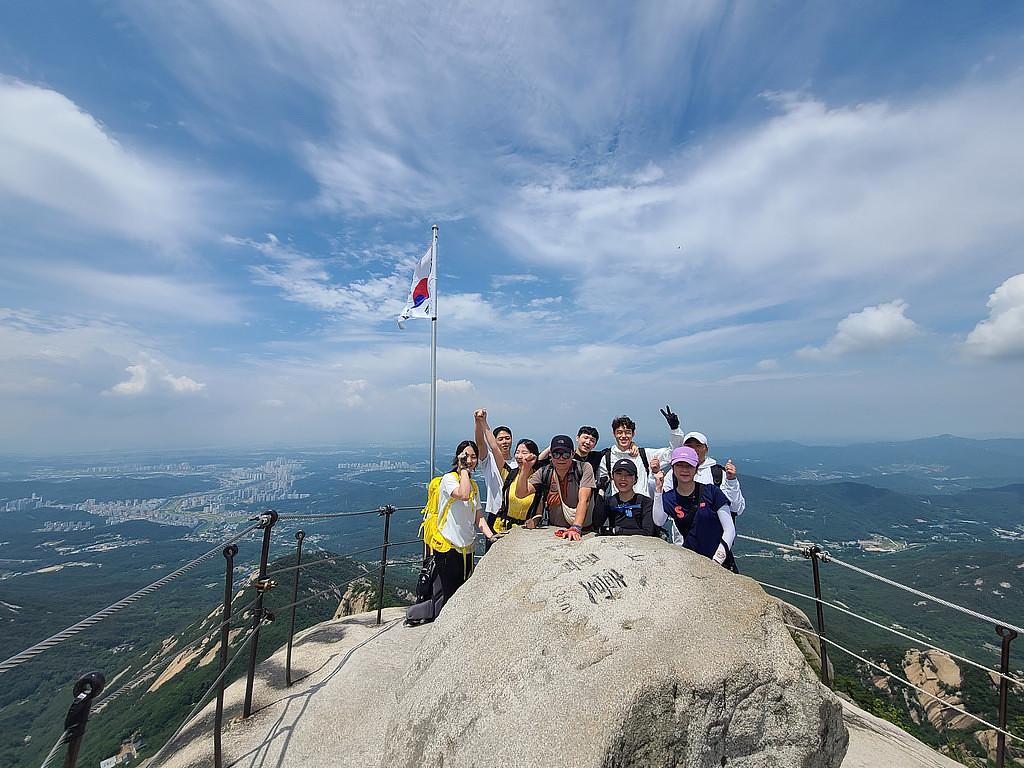
On quieter paths, walkers may acknowledge one another with a nod or a brief “Annyeonghaseyo,” the familiar Korean greeting. An encouraging “Himnaeseyo” may also be offered to someone working through a steep section.
You do not need to greet every person on a busy trail. A smile or a nod is enough when an exchange feels natural.
The more useful habit is awareness: leave room for others to pass, step aside safely when taking a break and keep conversations at a considerate volume.
These small gestures help make the mountain feel like a shared space.
3. Do Koreans Shout “Yaho!” at the Summit?
“Yaho!” is a familiar Korean mountaintop cheer, but it is not something visitors need to do.
The call is associated with the excitement of reaching a high point—a triumphant shout into the distance after the effort of climbing.
That familiar image should be distinguished from good trail etiquette. On a shared mountain, quiet celebration is more considerate. Enjoy the view, congratulate your companions and avoid repeated shouting or amplified music.
A summit photograph is another familiar way to mark the achievement. At a popular summit marker, wait your turn, take your photograph efficiently and leave space for the next group.
Sometimes, a photograph and a few quiet minutes looking across the ridges are all the celebration you need.
4. The Mountain Break: Gimbap, Fruit and Something Warm
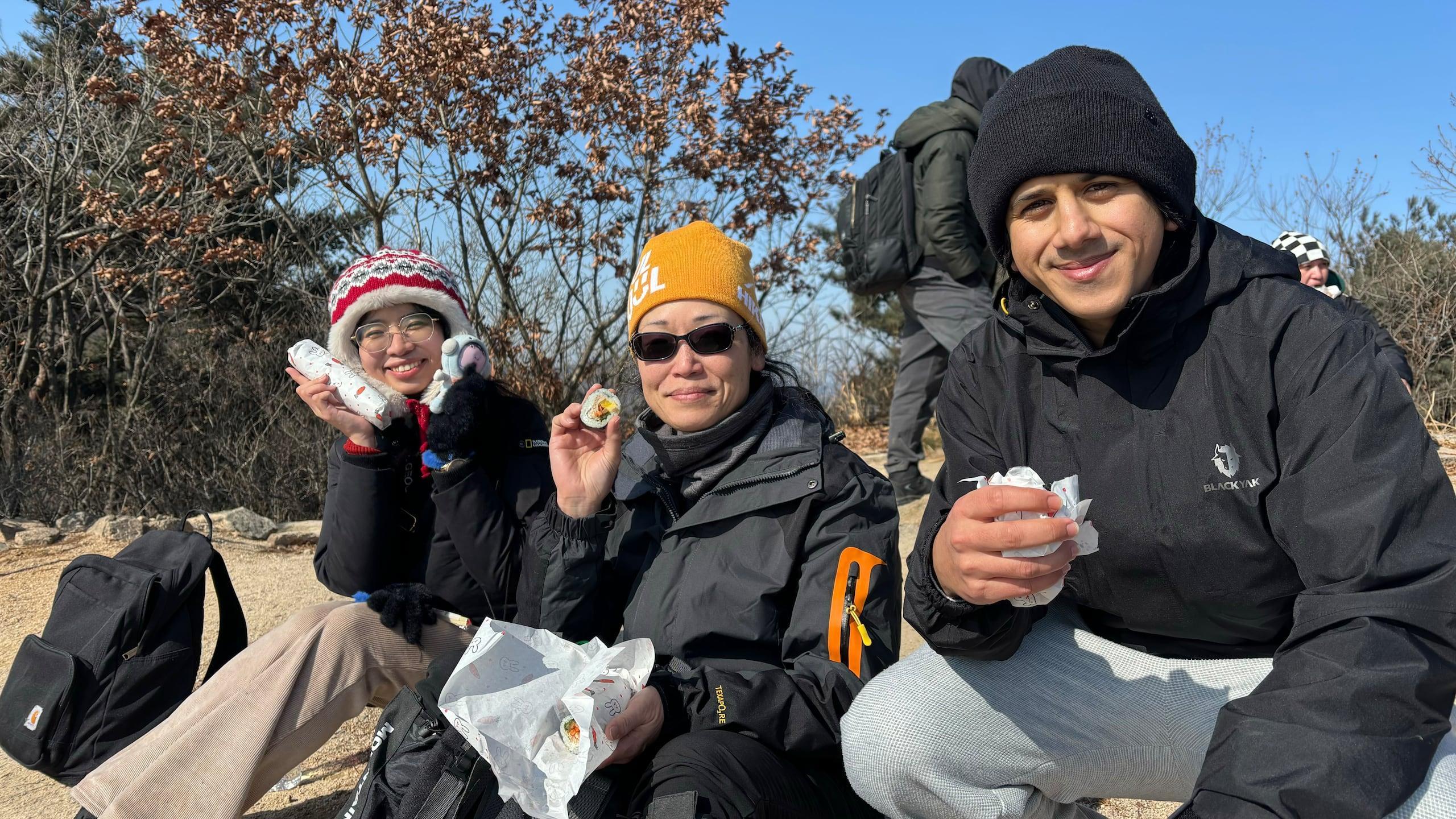
A hiking break can feel like a small picnic. Depending on the group and the season, a backpack might contain gimbap, fruit, a boiled egg or something warm in a thermos.
The pleasure is straightforward: finding a suitable place to rest, opening something simple to eat and taking a few minutes to appreciate where you are. Gimbap and ramyeon are familiar foods associated with Korean mountain outings. VISITKOREA
If you bring food, carry back every wrapper, food scrap and fruit peel. Do not assume that cooking or boiling water is permitted along your route; follow the park’s rules.
If companions offer to share, you can accept or politely decline. Sharing is a friendly possibility, and you should still carry enough food and water for yourself.
5. After the Descent: Makgeolli and Pajeon
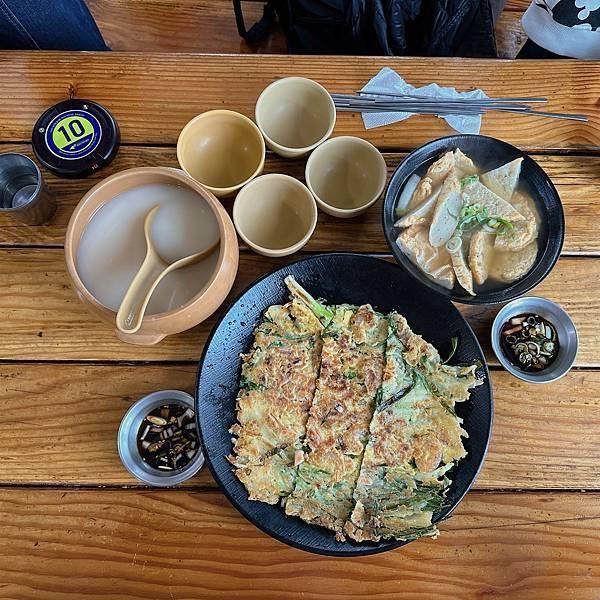
For many hikers, returning to the foot of the mountain means it is time for pajeon and an optional bowl of makgeolli. This pairing is a well-established part of Korea’s hiking and food culture. VISITKOREA
Makgeolli is a cloudy, fermented Korean grain-based alcoholic drink, often made with rice. Pajeon is a savory green onion pancake; haemul pajeon adds seafood. The combination is also enjoyed well beyond the hiking trail. english.visitkorea.or.kr
Picture a crisp-edged pancake arriving in the middle of the table. Bags are set down, shoulders relax, and the conversation shifts from the next uphill stretch to the memorable moments of the morning.
The meal gives the group somewhere to linger.
Plan it after the hike is finished. Drinking is optional: water, tea or another nonalcoholic drink fits just as comfortably at the table.
6. A Longer Lunch: Chicken Baeksuk
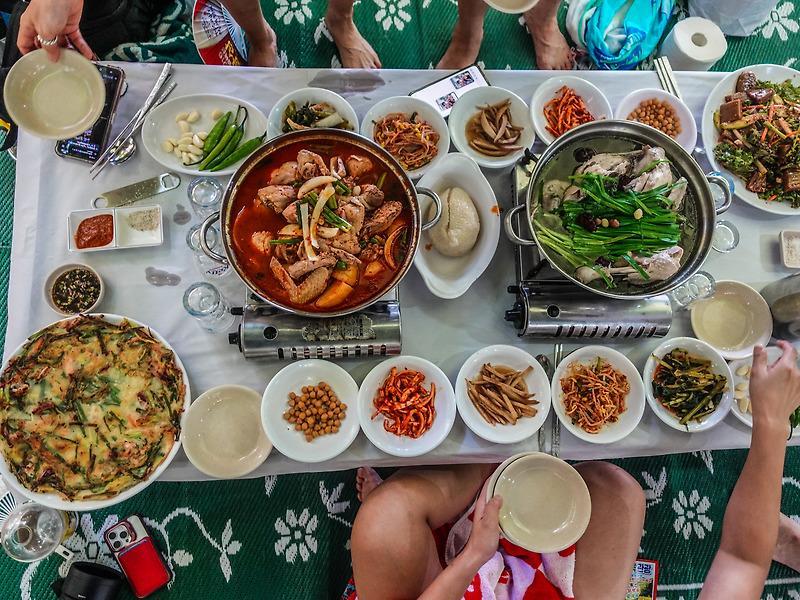
Dak baeksuk is chicken gently simmered in broth, with ingredients that may include garlic, jujubes, mushrooms or herbs, depending on the restaurant.
Around some mountain and valley destinations, sharing baeksuk is part of the outing. Seoul’s official tourism guide includes chicken baeksuk, duck baeksuk and seafood pajeon among foods to enjoy around hiking destinations.
Compared with a quick snack, this is a meal to give time to. A pot arrives at the table, companions share the tender chicken, and the afternoon begins to slow down.
Some restaurants specialize in mushroom broth or native chicken, known as tojongdak. Preparation can take time, so ordering ahead may be helpful.
Baeksuk is also worth distinguishing from samgyetang. Samgyetang typically features a smaller whole chicken stuffed with glutinous rice and ingredients such as ginseng. Baeksuk is a broader simmered preparation and is often served as a shared dish.
Not every hike ends with chicken or pancakes. Noodles, soup or another regional specialty can be just as natural a finish.
How Can Travelers Experience Korean Hiking Culture?
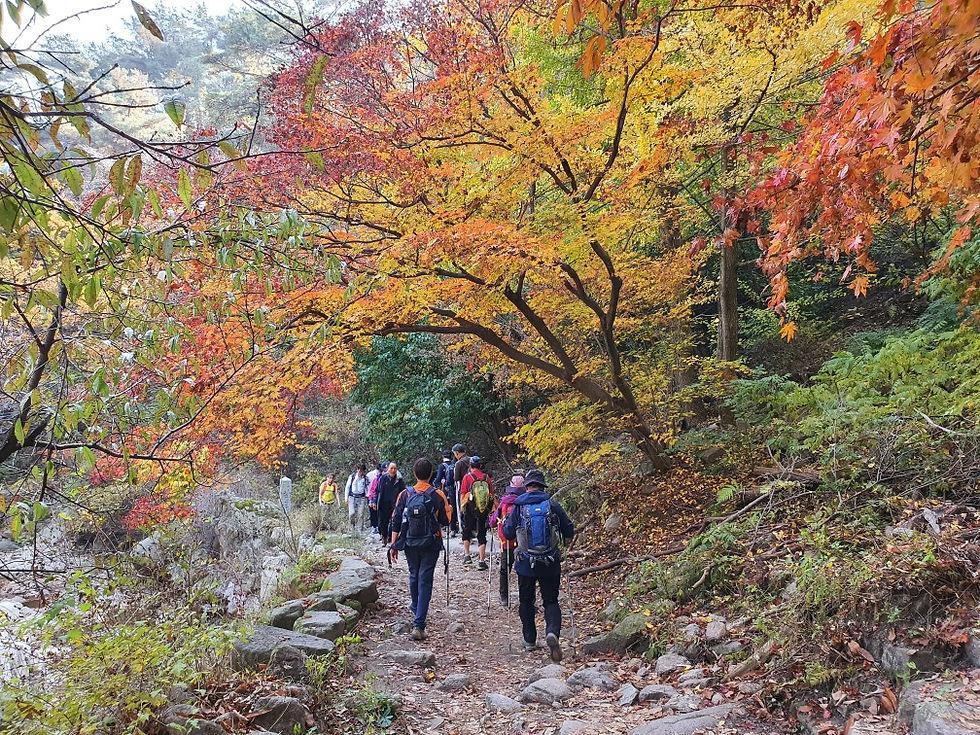
Start with a route that suits your fitness and the time you want to spend outdoors. A scenic lower trail can leave room for conversation and a relaxed meal; a demanding summit route needs a different schedule.
Plan the food alongside the walk. Check where your trail ends, which restaurants are nearby and whether a dish needs to be ordered ahead.
Wear footwear suited to the terrain, carry water and check current trail access and weather. Being close to a city does not make every mountain route easy.
The most rewarding approach is to participate at your own pace: return a greeting, pause for the view and leave enough time to enjoy the table afterward.
Frequently Asked Questions About Korean Hiking Culture
Do I have to shout “Yaho!” on a Korean mountain?
No. It is a recognizable mountaintop cheer, not a requirement. Keep noise down and celebrate in a way that respects the mountain and other visitors.
What do Koreans eat after hiking?
Familiar choices include pajeon with optional makgeolli, chicken baeksuk, noodles and soups. Preferences and restaurant options vary by region and group.
Can I enjoy the post-hike meal without alcohol?
Absolutely. Order the food you would like and choose a nonalcoholic drink. Sharing the meal and conversation is enough to join the experience.
Do I need to reach a summit?
No. A forest walk or shorter scenic route can be followed by the same relaxed meal. Choose a route that makes the whole day enjoyable for your group.
Discover Korea One Trail—and One Table—at a Time
The moment you remember might be the summit panorama. It might also be a greeting on a staircase, the first bite of crisp pajeon or a pot of chicken broth arriving at the table.
Would you choose a gentle forest walk and a long lunch, or a more active climb followed by a hearty local meal?
Tell Hanway about your walking preferences, food interests and travel dates. We can help shape a private Korea itinerary that brings mountain scenery and everyday food culture together at a pace that suits you.
DISCOVER MORE STORIES

How Many Days Do You Need in Korea? 7, 10 or 14 Days
2026.10.23

5 Winter Mountains in Korea Worth Building a Trip Around
2026.10.19

Korea Winter Travel: 5 Festivals for Ice Fishing, Sledding, and Snow Adventures
2026.10.16

Christmas in Korea: 5 Ways to Enjoy Seoul in December
2026.10.14

3 Korean Artisan Experiences: Meet the Makers Behind Traditional Crafts
2026.10.12

CONTACT
Plan My Korea Hiking & Food Experience
See the Korea everyone knows. Discover the Korea locals love.
SPEAK TO AN EXPERT