

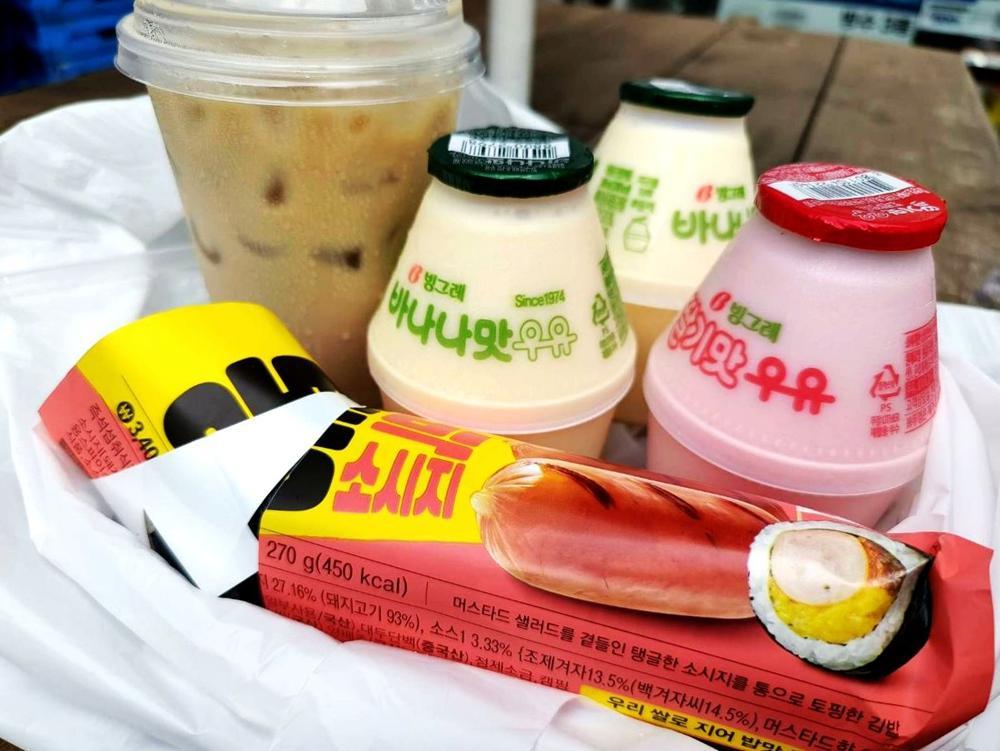
The automatic doors slide open, a cheerful jingle plays, and suddenly you are standing between rows of rice balls, sandwiches, instant noodles, and drinks with labels you may not understand.
Korean convenience stores are more than places to buy snacks. For many locals, they are a practical breakfast stop before work, school, or an early train. The food is quick, affordable, and designed to be eaten with minimal preparation.
If you are wondering what to buy for a Korean convenience store breakfast, these are the combinations locals actually reach for.
1. Triangle Gimbap and Banana Milk

Best for: A fast breakfast before sightseeing
Triangle gimbap, or samgak gimbap, is one of Korea’s most recognizable convenience-store foods. It consists of rice wrapped in seaweed with a filling in the center.
Popular flavors include tuna mayonnaise, kimchi, bulgogi, and spicy chicken. The numbered packaging may look confusing at first, but it is designed to keep the seaweed crisp. Pull tab number one down the center, then remove tabs two and three from the sides.
Pair it with banana milk for the full convenience-store experience. It may not be the most nutritionally balanced breakfast, but it is quick, inexpensive, and easy to eat on the way to your first destination.
2. Gimbap and Bottled Coffee

Best for: Commuters and early KTX travelers
A full gimbap roll is more filling than triangle gimbap and works well when you have a long morning ahead.
Convenience-store gimbap usually contains rice, vegetables, egg, and fillings such as tuna, ham, pork cutlet, or bulgogi. Some varieties are served cold, while others taste better after a short trip to the microwave.
Add a bottled coffee or buy a cup of ice and a packaged coffee drink from the refrigerator. Pouring coffee into a plastic cup filled with ice is a familiar morning ritual in Korea, even when the weather is cold.
This combination is particularly useful before taking the KTX. You can eat before boarding or carry it onto the train without creating too much mess.
3. Egg Sandwich and Fresh Milk

Best for: Travelers who prefer a familiar breakfast
Korean convenience-store sandwiches are usually soft, slightly sweet, and generously filled. Egg salad sandwiches are among the safest choices for travelers who do not want rice or spicy food first thing in the morning.
You may also find ham and cheese, potato salad, chicken, or fruit sandwiches. Pair one with fresh milk, soy milk, or a bottled juice for a simple breakfast that requires no heating or utensils.
Check the label carefully if you have allergies. Egg, dairy, wheat, nuts, and seafood ingredients may appear in products that do not look unusual from the front of the package.
4. Roasted Sweet Potato and Boiled Eggs

Best for: A lighter and more balanced breakfast
Not every Korean convenience-store breakfast has to come in a colorful plastic package.
Many stores sell roasted or steamed sweet potatoes, packaged boiled eggs, and smoked eggs. This is a common combination for people who want something simple, filling, and higher in protein.
Korean sweet potatoes are naturally sweet and dense, while smoked eggs have a slightly chewy texture and savory flavor. Add water, unsweetened tea, or soy milk to complete the meal.
Availability varies by store, but this combination is worth looking for if you want a break from sandwiches, noodles, and processed snacks.
5. Yogurt, Banana, and Granola
Best for: Hot mornings and lighter appetites
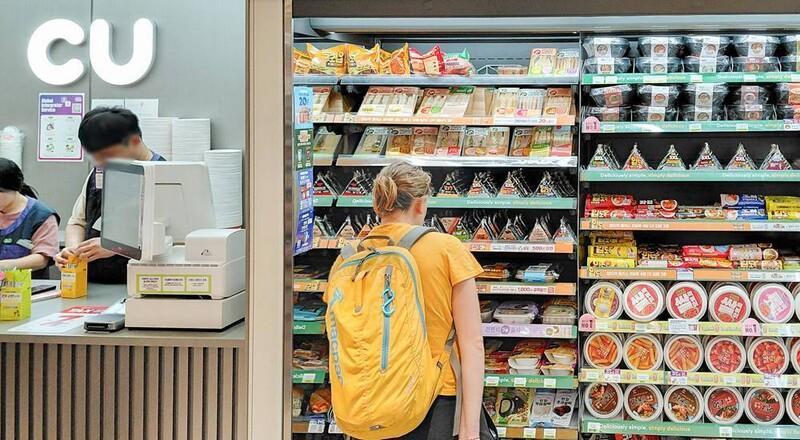
Most larger convenience stores have a refrigerator section with yogurt drinks, Greek-style yogurt, fruit, and small cereal or granola products.
Choose plain or Greek-style yogurt, then add a banana and a packet of nuts or granola. It is an easy option when summer humidity makes a hot breakfast feel impossible.
This is also helpful for travelers with a busy food itinerary. Korea offers plenty of substantial lunches and dinners, so starting with a lighter breakfast leaves more room for barbecue, noodles, street food, or a traditional market meal later in the day.
6. Cup Porridge and Kimchi
Best for: Cold mornings or a tired stomach
Packaged rice porridge, known as juk, is a gentle breakfast after a late night, a long flight, or several days of rich restaurant food.
Common varieties include abalone, vegetable, beef, pumpkin, and chicken porridge. Some products can be eaten at room temperature, but they are usually more comforting when heated.
Look for individually packaged kimchi nearby if you want more flavor. Just remember that kimchi can be spicy, sour, and strongly scented, so it may not be the best choice if you are about to board a crowded train.
7. Cup Ramyeon and a Boiled Egg

Best for: A filling breakfast after a late night
Cup ramyeon is not an everyday breakfast for everyone, but it is absolutely part of Korean convenience-store culture.
Choose your noodles, open the lid halfway, add the seasoning, and fill the cup with hot water to the marked line. Close the lid and wait for the time printed on the package, usually three to four minutes.
Adding a boiled egg makes the meal more filling. Some stores also sell cheese slices, sausages, or triangular gimbap that can be eaten alongside the noodles.
Check the spice level before buying. A package that looks friendly can still deliver a serious amount of heat at eight in the morning.
How Much Does a Korean Convenience Store Breakfast Cost?
A basic breakfast commonly falls somewhere between ₩3,000 and ₩8,000, depending on the products you choose.
Triangle gimbap and milk will usually be at the lower end, while a sandwich, premium coffee, yogurt, and fruit combination will cost more. Prices and promotions change regularly, and convenience stores often offer deals such as “1+1” or “2+1.”
- 1+1 means buy one and receive one free.
- 2+1 means buy two and receive a third free.
These promotions are useful for couples, families, or travelers buying snacks for later.
What Should Travelers Know About Eating in Convenience Stores?

Some Korean convenience stores provide tables where customers can eat. Seating is more common in larger stores, university areas, business districts, and locations near rivers or tourist destinations.
When you finish, separate your waste according to the bins provided. Empty liquids before throwing away cups or containers, and place food waste in the designated bin if one is available.
Avoid opening strongly scented food on crowded buses or subway trains. Eating on the KTX is generally more accepted, but compact foods such as gimbap, sandwiches, and bakery items are more considerate than soup or heavily scented noodles.
Which Breakfast Should You Choose?
Choose according to the kind of morning you have planned.
- Pick triangle gimbap and banana milk when you need something fast.
- Choose gimbap and coffee before a KTX journey or long sightseeing day.
- Try an egg sandwich and milk for a familiar, non-spicy breakfast.
- Choose sweet potato and eggs when you want something lighter.
- Pick yogurt, fruit, and granola during Korea’s hot summer.
- Try rice porridge when your stomach needs a quiet morning.
- Choose cup ramyeon when you are hungry and have time to sit down.
The best Korean convenience-store breakfast is not necessarily the most famous product. It is the combination that fits your schedule, appetite, and next destination.
Experience Everyday Korea with Hanway
Convenience stores are a small but revealing part of daily life in Korea. Knowing what to buy, how to heat it, and where to eat it can make an ordinary morning feel less confusing and more local. Hanway creates personalized Korea itineraries for travelers who want to experience more than the standard attractions. From local breakfast stops and traditional markets to regional train journeys and private transportation, we help design a trip around your interests and preferred pace.
Want to experience Korea like a local? Let Hanway create a personalized journey beyond the usual tourist route.
DISCOVER MORE STORIES

Is Jeju Island Worth Visiting in Winter? 5 Things to Enjoy on Your Trip
2026.09.21

Beyond Seoul: The Best Places to Visit in Korea with Family
2026.09.18

Hanok Stays in Korea: Where to Spend a Night in Seoul, Jeonju, and Gyeongju
2026.09.16

Why Visit Jeonju? A Guide to Korea’s City of Hanok, Food, and Living Traditions
2026.09.14

Traveling in Korea During Chuseok: Essential Tips for Visitors
2026.09.10

CONTACT
Experience Korea beyond the tourist spots with a personalized local journey designed by Hanway.
Tell us what you’re looking for,
and our team will craft a private journey
that matches your taste, pace, and purpose.