

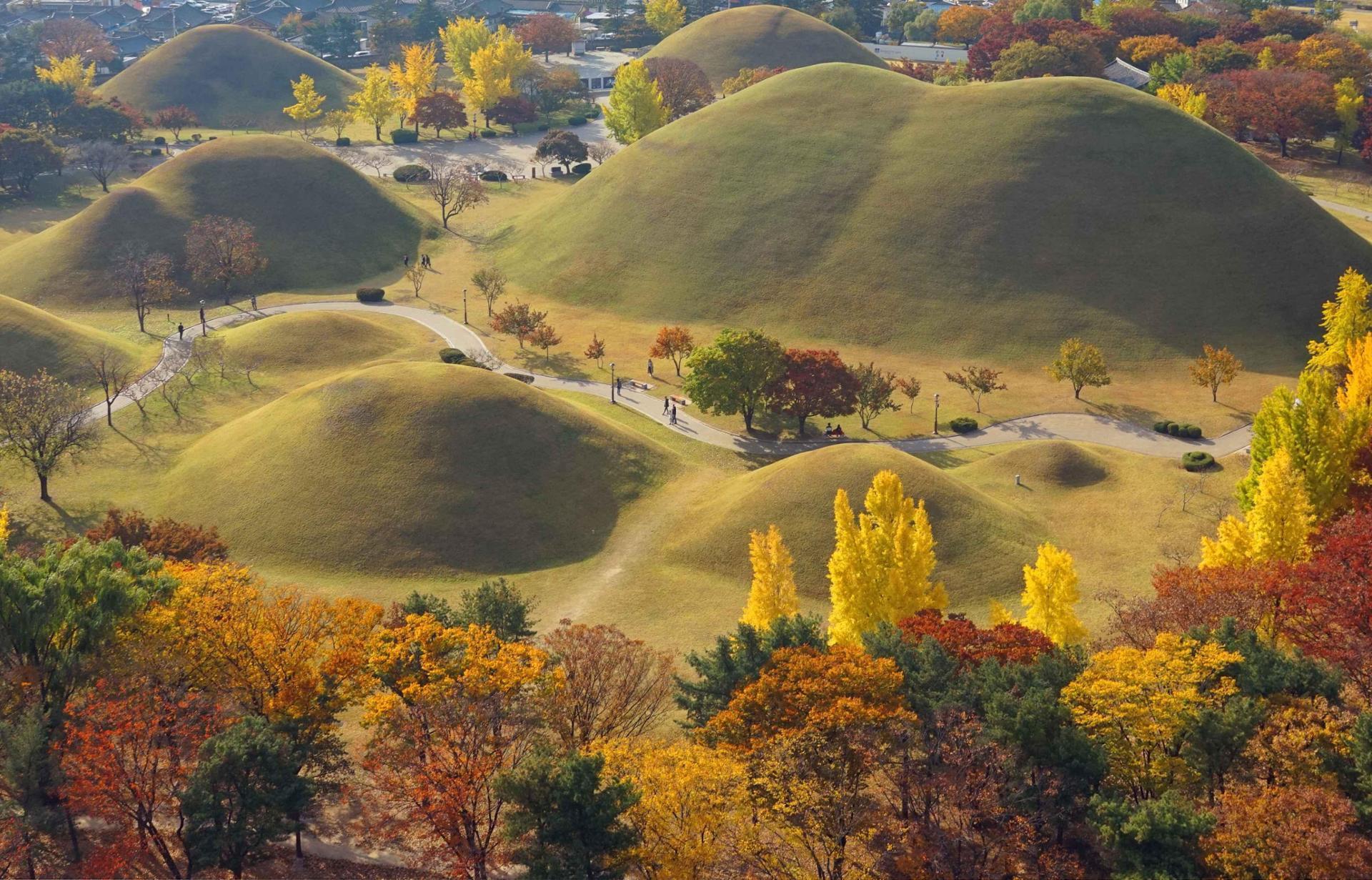
Seoul shows you modern Korea. Busan introduces you to its coastal energy. But if you want to understand where much of Korea’s history, art, and Buddhist culture began, visit Gyeongju.
Known as Korea’s “museum without walls,” Gyeongju was the capital of the Silla Kingdom, which ruled for nearly 1,000 years. Royal tombs rise between modern neighborhoods, ancient observatories stand beside flower fields, and Buddhist temples remain surrounded by forested mountains.
For international travelers looking beyond Korea’s most familiar cities, Gyeongju offers something different: history that feels present, landscapes designed for slow exploration, and enough cultural depth to justify more than a quick day trip.
Why Is Gyeongju Worth Visiting?

Gyeongju is worth visiting because it brings Korean history into the landscape.
Rather than seeing important objects only inside a museum, you can walk between royal tombs, palace ruins, pagodas, temples, and archaeological sites throughout the city.
The UNESCO-listed Gyeongju Historic Areas include five heritage zones connected to Silla’s royal, Buddhist, and everyday culture. Together, they contain tombs, palace remains, temple sites, stone sculptures, pagodas, and mountain fortresses. UNESCO describes the area as an exceptional concentration of Korean Buddhist art and Silla cultural heritage.
But Gyeongju is not only for travelers who already love history. Its open spaces, cycling routes, cafés, traditional accommodations, and peaceful evening scenery make it one of the best destinations in Korea for slow travel.
What Makes Gyeongju Different from Seoul and Busan?
Seoul and Busan move quickly. Gyeongju invites you to pause.
Many of the central historic sites are connected by walking and cycling routes. Instead of spending the entire day moving between crowded attractions, you can explore at a comfortable pace, stop for tea, walk around ancient tombs, and return to important sites after sunset.
The city also presents Korean history differently. In Seoul, much of the visible royal heritage comes from the later Joseon Dynasty. Gyeongju introduces travelers to the much earlier Silla Kingdom and its Buddhist art, international connections, and royal culture.
This makes Gyeongju an ideal complement to Seoul rather than a replacement for it.
What Are the Best Historical Places to Visit in Gyeongju?
Daereungwon Tomb Complex
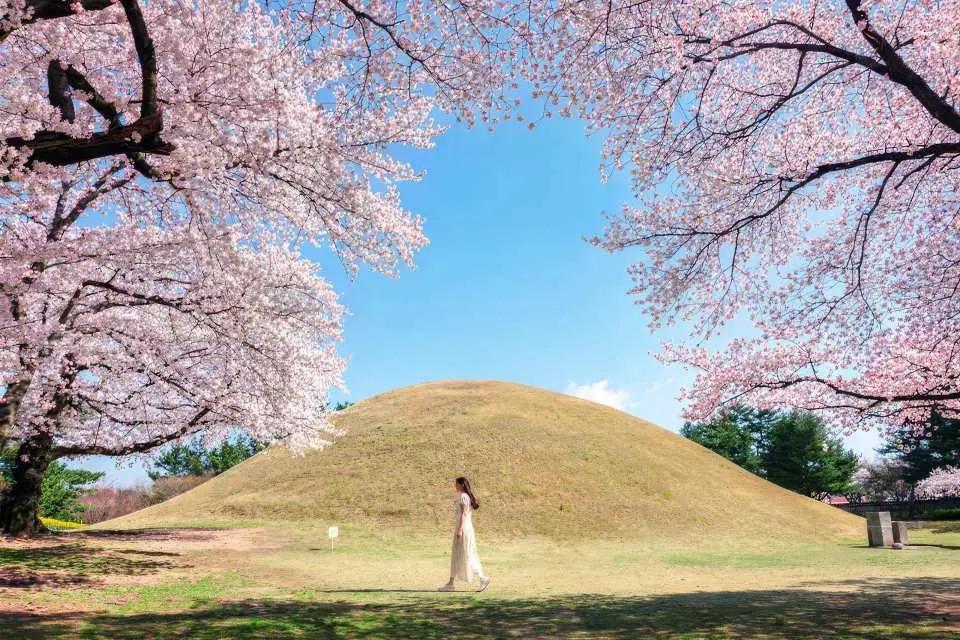
The large grassy mounds at Daereungwon are royal tombs from the Silla period. Their simple shapes create one of Gyeongju’s most recognizable landscapes.
Some tombs remain closed, while Cheonmachong Tomb allows visitors to step inside and see how an elite Silla burial was constructed. Replicas of excavated gold crowns and other objects help explain the sophistication of the kingdom.
The area is especially atmospheric in the early morning, when the paths are quieter.
Cheomseongdae Observatory
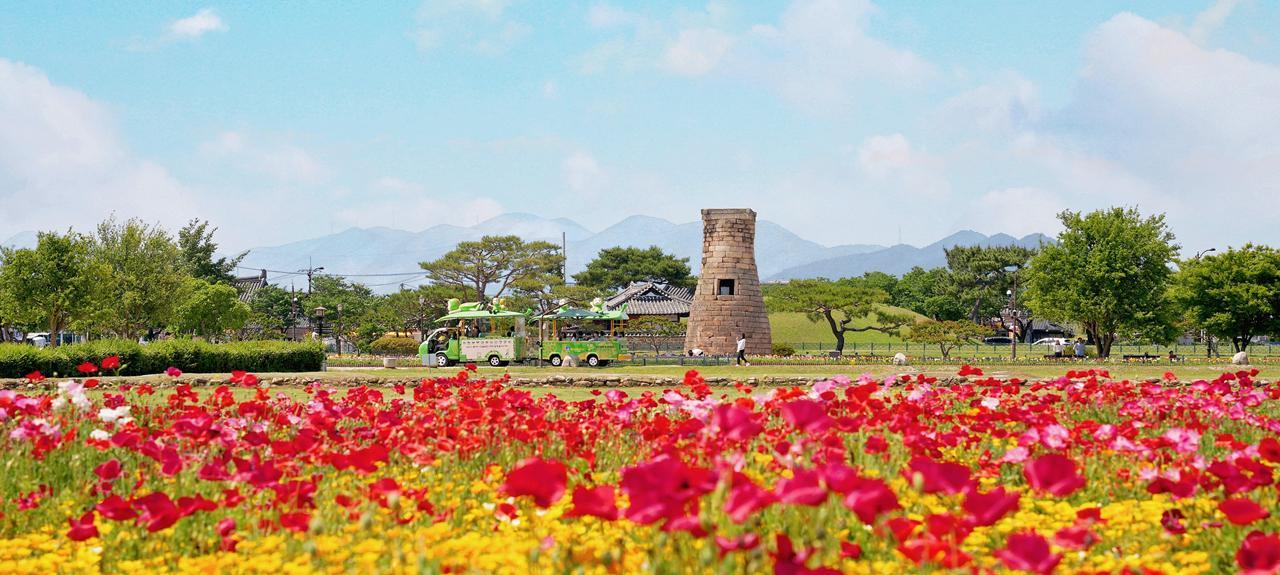
Built during the Silla period, Cheomseongdae is one of East Asia’s oldest surviving astronomical observatories.
The structure itself is compact, but its significance becomes clearer when viewed within the surrounding Wolseong heritage area. It reflects the Silla Kingdom’s interest in astronomy, agriculture, and the relationship between political authority and the natural world.
Donggung Palace and Wolji Pond
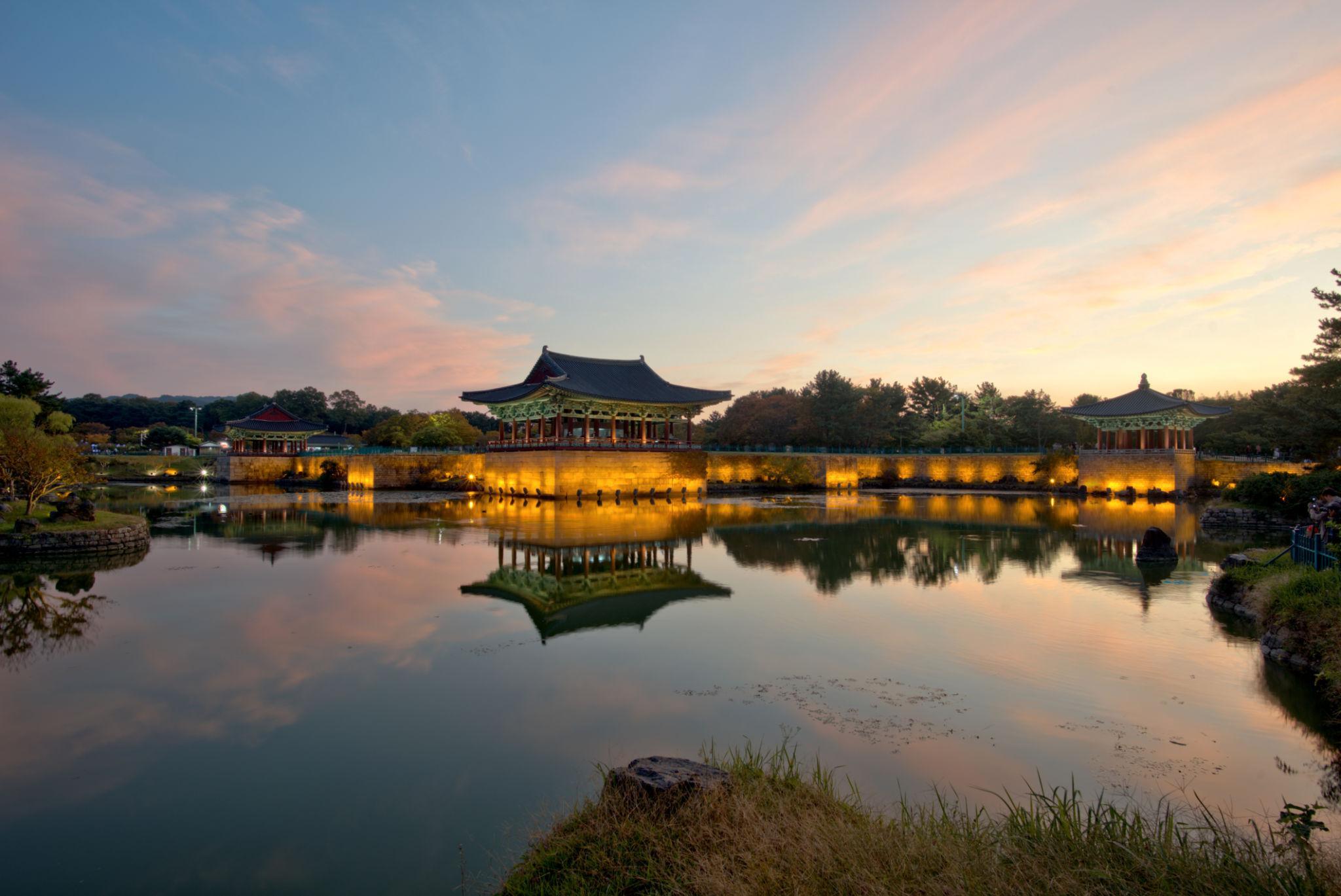
Donggung Palace and Wolji Pond is one of the best places to visit in Gyeongju at night.
Once part of a Silla royal palace complex, the reconstructed pavilions are illuminated after sunset and reflected in the pond. Visiting in the evening creates a natural ending to a day of exploring the city’s historic center.
Gyeongju National Museum
Many treasures discovered in Gyeongju are preserved at the Gyeongju National Museum.
The museum provides essential context for the royal tombs, temples, and archaeological sites around the city. Gold crowns, Buddhist art, ceramics, and everyday objects reveal how sophisticated and internationally connected the Silla Kingdom was.
Travelers interested in history should consider visiting the museum early in their stay. Understanding the objects makes the outdoor heritage sites more meaningful.
Why Should You Visit Bulguksa and Seokguram?
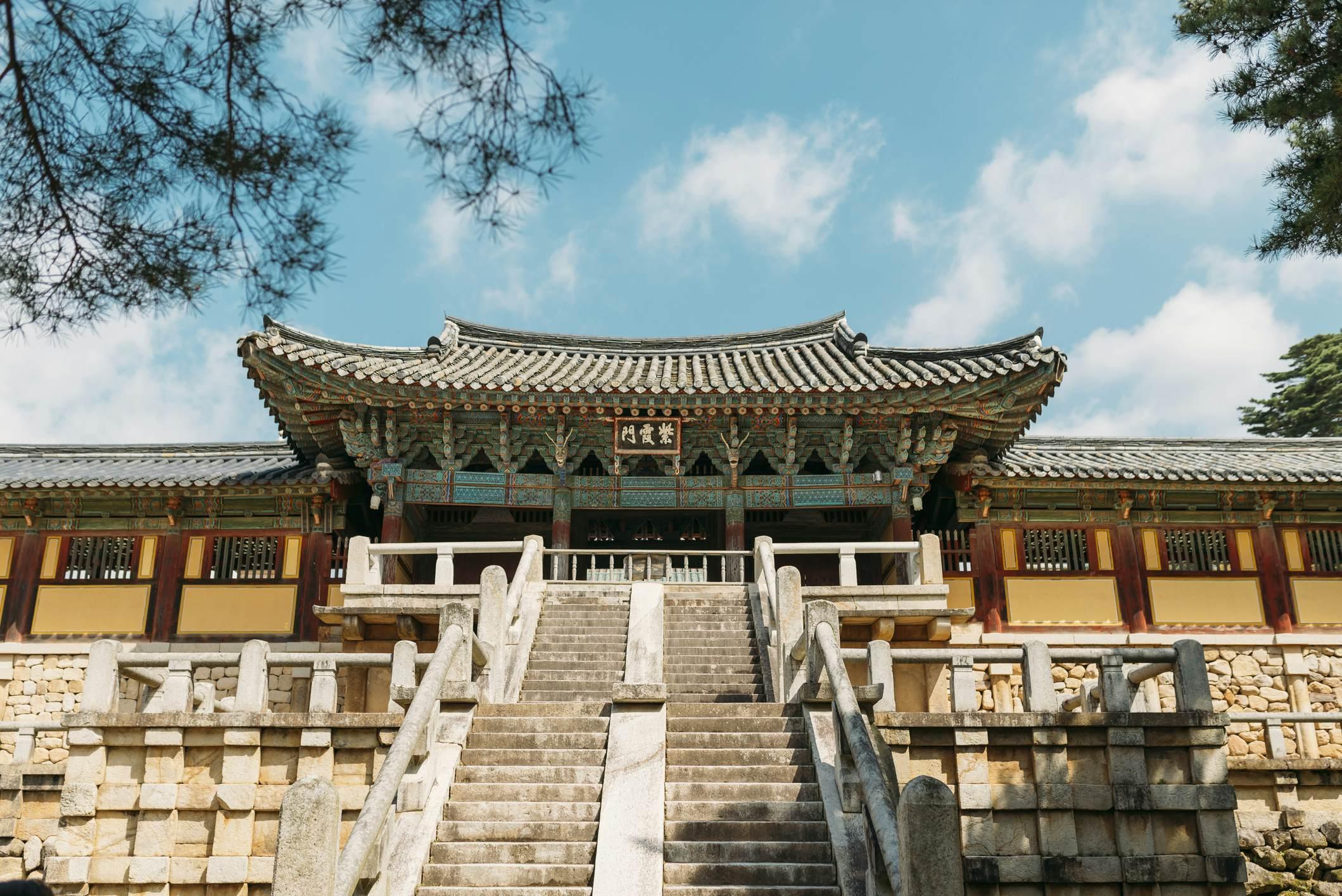
Bulguksa Temple and Seokguram Grotto are among Korea’s most important Buddhist heritage sites.
Bulguksa is known for its stone terraces, bridges, pagodas, and wooden halls. The layout was designed to represent a Buddhist spiritual world, making the temple more than a collection of beautiful buildings.
Nearby Seokguram Grotto contains a carefully positioned stone Buddha facing the East Sea. Together, Bulguksa and Seokguram were designated a UNESCO World Heritage site in 1995.
They are outside central Gyeongju, so transportation and timing should be planned in advance. Visiting with a knowledgeable guide can also help travelers understand the symbolism, architecture, and religious meaning that may not be obvious from appearance alone.
Is Gyeongju Good for Slow Travel?
Yes. Gyeongju is one of the best slow-travel destinations in South Korea.
The central heritage district is well suited to walking and cycling. Travelers can move between Daereungwon, Cheomseongdae, Gyerim Forest, Wolseong, and nearby traditional streets without following a rushed sightseeing schedule.
An e-bike can make the experience more comfortable, particularly for families or travelers who want to cover more ground while remaining connected to the landscape.
Gyeongju also rewards unplanned time. A quiet café, a path between tombs, or a sunset near an old palace site can be as memorable as a famous attraction.
What Is Hwangnidan-gil?
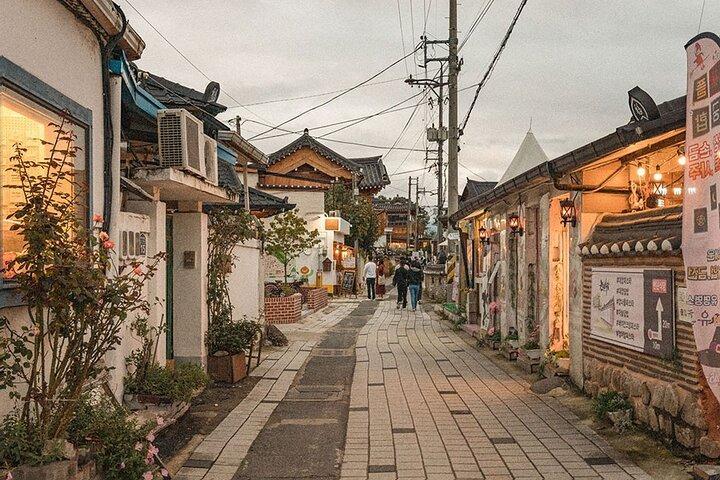
Hwangnidan-gil is a lively street near Daereungwon filled with cafés, restaurants, small shops, and hanok-inspired buildings.
It adds a contemporary side to a historic Gyeongju itinerary. After exploring archaeological sites, travelers can enjoy local food, modern desserts, or a relaxed evening nearby.
The area can become busy, especially on weekends. Staying close enough to visit early or later in the day provides a more comfortable experience.
What Should You Eat in Gyeongju?
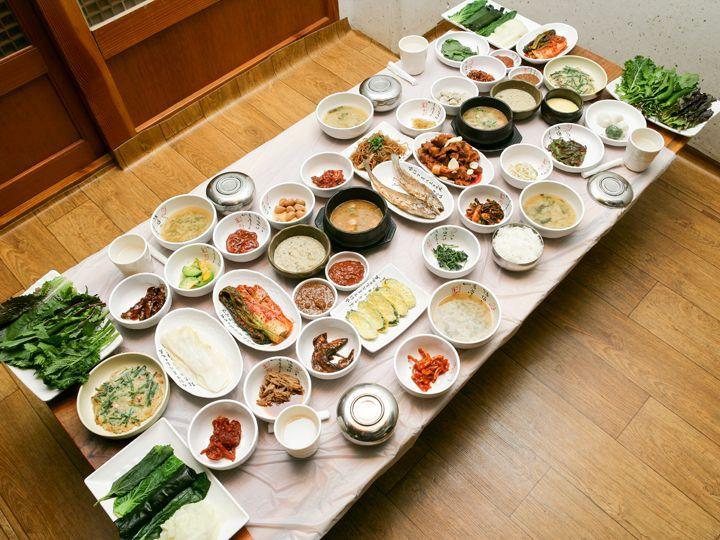
Gyeongju’s food is usually simple, generous, and closely connected to the surrounding region.
Popular choices include:
- Ssambap: Rice and side dishes wrapped in fresh leafy vegetables
- Hwangnam-ppang: Small pastries filled with sweet red-bean paste
- Korean set meals: Rice served with soup, vegetables, fish, meat, and seasonal side dishes
- Traditional tea and desserts: Often found in hanok-style cafés
Food can become part of the historical experience when restaurants and cafés are selected for quality and atmosphere rather than convenience alone.
How Many Days Should You Spend in Gyeongju?
Spend at least two nights in Gyeongju. Three nights are even better for travelers interested in history, Buddhism, cycling, or slower travel.
A day trip may cover several famous landmarks, but it often leaves little time for the museum, mountain temples, local neighborhoods, or evening scenery.
A balanced itinerary could include:
- Day 1: Daereungwon, Cheomseongdae, the museum, and Donggung Palace at night
- Day 2: Bulguksa, Seokguram, local food, and Hwangnidan-gil
- Day 3: Namsan, a temple experience, cycling, or relaxed independent exploration
Gyeongju is easy to combine with Busan and can also be reached from Seoul by KTX via Singyeongju Station. The historic sites are spread across different areas, so thoughtful transportation planning makes a significant difference.
Discover Gyeongju Beyond a Day Trip with Hanway
Gyeongju becomes much more meaningful when its temples, tombs, artifacts, and landscapes are connected into one story.
Hanway designs private Gyeongju journeys around your interests and preferred pace. We can arrange knowledgeable cultural guides, comfortable transfers from Seoul or Busan, e-bike experiences, thoughtfully selected accommodation, and local dining—while leaving enough time for independent exploration.
Instead of rushing through Korea’s ancient capital in a single day, experience Gyeongju as it deserves to be experienced: slowly, thoughtfully, and with the right local context.
DISCOVER MORE STORIES

Is Jeju Island Worth Visiting in Winter? 5 Things to Enjoy on Your Trip
2026.09.21

Beyond Seoul: The Best Places to Visit in Korea with Family
2026.09.18

Hanok Stays in Korea: Where to Spend a Night in Seoul, Jeonju, and Gyeongju
2026.09.16

Why Visit Jeonju? A Guide to Korea’s City of Hanok, Food, and Living Traditions
2026.09.14

Traveling in Korea During Chuseok: Essential Tips for Visitors
2026.09.10

CONTACT
Experience Korea’s Ancient Capital at Your Own Pace
Share your travel dates, interests, and preferred pace with Hanway. We will design a personalized Gyeongju itinerary with cultural guides, private transportation, curated stays, local dining, and meaningful historical experiences.
SPEAK TO AN EXPERT